


Choosing how to replace a full arch of missing teeth is a big decision. Patients often compare All-on-4 dental implants with implant-supported dentures because both options improve stability, comfort, and function compared to traditional dentures. While they share similarities, they work very differently and serve different needs.
At Canyon Rim Dental in Salt Lake City, we have dental implant specialists, and they can help patients understand these differences clearly so they can choose the option that fits their lifestyle, health, and long-term goals. Below, we break down how All-on-4 dental implants compare to implant-supported dentures, including the benefits, drawbacks, and who each option works best for.
What Are All-on-4 Dental Implants?
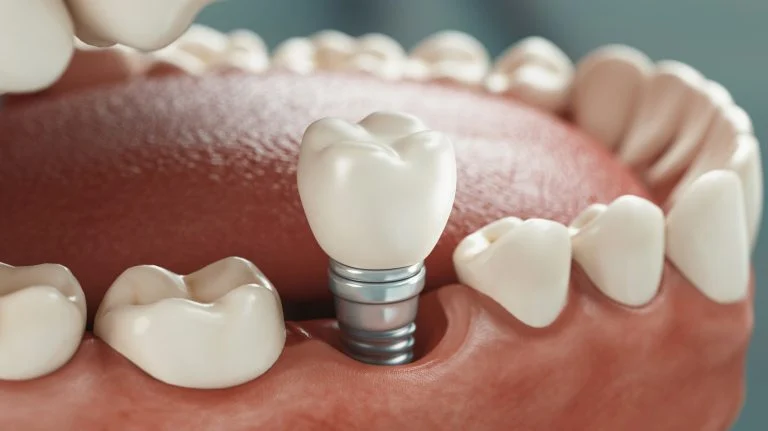
All-on-4 dental implants replace an entire arch of teeth using four implants. Two implants sit vertically in the front of the jaw, and two angle toward the back to maximize existing bone. This design often eliminates the need for bone grafting.
A fixed full-arch prosthetic attaches permanently to the implants. Patients do not remove it at home, and it functions much like natural teeth.
Key Features of All-on-4 Implants
- Four implants support a full arch of teeth
- Fixed, non-removable restoration
- Designed for strength, stability, and long-term use
- Often completed with same-day temporary teeth
What Are Implant-Supported Dentures?
Implant-supported dentures, sometimes called snap-on dentures, combine dental implants with a removable denture. Typically, two to four implants anchor the denture in place using attachment systems that allow it to snap on and off.
Patients remove the denture daily for cleaning, similar to traditional dentures, but benefit from improved stability and reduced movement.
Key Features of Implant-Supported Dentures
- Usually supported by two to four implants
- Removable for cleaning
- More secure than traditional dentures
- Lower initial cost than fixed implant solutions
Stability and Function Compared
Stability often becomes the deciding factor between these two options.
All-on-4 dental implants remain fixed in place at all times. Because the prosthetic attaches directly to the implants, patients can bite and chew with confidence. There is no movement, rocking, or clicking during meals or conversations.
Implant-supported dentures offer improved stability over traditional dentures, but they still allow some movement. While implants reduce slipping, removable dentures do not deliver the same biting force as a fixed solution. Many patients still need to avoid very hard or sticky foods.
Comfort and Daily Experience
All-on-4 implants feel more like natural teeth because they stay in place and do not cover large areas of the gums or palate. This design improves speech, taste, and overall comfort. Patients brush and floss similarly to natural teeth, with no need to remove the prosthetic.
Implant-supported dentures require removal for cleaning. Some patients appreciate this flexibility, while others prefer not to handle their teeth daily. Because the denture rests partially on the gums, pressure points and sore spots may still occur over time.
Cost Considerations
Implant-supported dentures usually cost less upfront because they require fewer materials and less complex prosthetics. This option works well for patients seeking improved stability without committing to a fixed restoration.
All-on-4 dental implants involve a higher initial investment. However, they often reduce long-term costs related to relines, adjustments, and replacements. Fixed restorations typically last longer and require fewer modifications over time.
Maintenance and Long-Term Care
All-on-4 implants require consistent oral hygiene and professional cleanings. Because patients cannot remove the prosthetic, regular dental visits play an important role in long-term success.
Implant-supported dentures require daily removal and cleaning. Attachments and denture bases may wear over time and need periodic replacement. While maintenance remains manageable, it involves more steps compared to fixed implants.
Pros and Cons at a Glance
All-on-4 Dental Implants Pros
- Fixed, permanent solution
- Strong biting and chewing ability
- No removal or adhesives
- Natural feel and appearance
All-on-4 Dental Implants Cons
- Higher upfront cost
- Surgical placement required
Implant-Supported Dentures Pros
- Lower initial cost
- Improved stability over traditional dentures
- Removable for cleaning
Implant-Supported Dentures Cons
- Less chewing power than fixed implants
- Daily removal required
- Possible movement over time
Who Is a Good Candidate for Each Option?
All-on-4 dental implants often work best for patients who want a permanent solution and enough bone structure to support implant placement. This option suits patients who value stability, comfort, and long-term performance.
Implant-supported dentures may suit patients who want improved stability but prefer a removable solution or need a more budget-friendly option. They also work well for patients transitioning from traditional dentures.
Making the Right Choice
Both All-on-4 dental implants and implant-supported dentures offer meaningful improvements over traditional dentures. The right choice depends on how you want your teeth to feel, function, and fit into your daily life.
At Canyon Rim Dental in Salt Lake City, we provide full-scope implant care under one roof. Our team takes time to explain your options, answer questions, and design a plan that supports your comfort and long-term oral health. If you are considering All-on-4 implants or implant-supported dentures, schedule a consultation to explore which solution fits you best.