



You want a brighter smile, but you also want to protect your teeth. It’s normal to wonder: Does teeth whitening damage enamel?
With so many products and opinions online, it can feel hard to know what’s true.
Teeth whitening does not permanently damage healthy enamel when you use approved products as directed, but stronger treatments can temporarily reduce enamel hardness and cause sensitivity.
Some studies found that high‑strength, in‑office bleaching lowered enamel microhardness more than at‑home or over‑the‑counter options, though much of this change improved over time.
You deserve clear facts before you choose a whitening method. When you understand how whitening works and how to use it safely, you can brighten your smile while protecting your enamel.
Key Takeaways
- Approved whitening products are safe for healthy enamel when you follow directions.
- Stronger treatments may cause temporary sensitivity or small surface changes.
- Smart product choices and proper aftercare help protect and support your enamel.
How Teeth Whitening Works
Teeth whitening uses peroxide-based ingredients to break apart stains inside your teeth. The process affects both tooth enamel and the layer under it, called dentin, which is why results can vary from person to person.
Active Ingredients: Hydrogen Peroxide and Carbamide Peroxide
Most whitening products rely on hydrogen peroxide or carbamide peroxide. These ingredients create a chemical reaction that breaks down dark stain molecules into smaller, less visible pieces.
Hydrogen peroxide works quickly. Dentists often use it in professional whitening because they can control the strength and protect your gums during treatment.
Carbamide peroxide breaks down into hydrogen peroxide and urea. It works more slowly, which makes it common in at-home whitening gels and trays. Because it releases peroxide over time, it may cause less sudden sensitivity for some people.
The strength of these ingredients matters. Higher concentrations can whiten teeth faster, but they also raise the risk of temporary sensitivity if you use them too often.
Enamel and Dentin: The Whitening Process
Your tooth enamel is the hard outer layer of your tooth. It protects the softer inner layer called dentin.
Enamel is slightly porous. When you use a whitening treatment, peroxide moves through these tiny pores and reaches the dentin underneath. Stains often sit deep in this layer, especially if they come from coffee, tea, smoking, or aging.
Whitening does not scrape or file down enamel when used correctly. Instead, it changes the color of stain molecules through oxidation. This reaction makes them reflect less light, so your teeth look whiter.
You may notice mild sensitivity during or after teeth whitening. This can happen because the peroxide temporarily increases the movement of fluid inside the tooth. In most cases, this feeling fades within a few days.
Differences Between Professional and Over-the-Counter Whitening
Professional teeth whitening happens in a dental office. Your dentist uses stronger peroxide and protects your gums with barriers or gels. Some treatments also include fluoride or other minerals to support enamel after the procedure.
In contrast, many store-bought whitening products use lower peroxide levels. These include strips, pens, and generic trays. They can work, but results may take longer because the formula is weaker.
Custom trays from your dentist fit your teeth closely. This helps spread the gel evenly and lowers the risk of gum irritation.
When you choose between professional whitening and at-home whitening, think about strength, safety, and supervision. The right option depends on your enamel health, sensitivity level, and how quickly you want results.
Does Teeth Whitening Damage Enamel? What Science Says
Research shows that teeth whitening and enamel can work together safely when you use the right products and follow directions. Studies focus on short-term enamel changes, enamel erosion risk, and how dentin and saliva affect sensitivity.
Temporary Changes to Enamel Structure
When you whiten your teeth, peroxide agents like hydrogen peroxide pass through the enamel to break apart stain molecules. This process can cause small, short-term changes on the enamel surface.
You may see slight increases in surface roughness or tiny openings in the enamel. Some research notes a brief drop in enamel “microhardness,” which means the surface becomes a bit softer for a short time.
These changes are usually temporary. Your saliva plays a key role in repair. It adds minerals like calcium and phosphate back into the enamel in a process called remineralization.
A review of expert guidance explains that bleaching can cause temporary enamel changes that often reverse over time, especially with proper use and dental supervision, as discussed in this overview of safe teeth bleaching and enamel effects.
When you follow instructions and avoid overuse, these short-term changes do not equal permanent enamel damage.
Enamel Erosion and Long-Term Risks
Many people ask, can teeth whitening damage enamel in the long run? Current evidence shows that approved whitening treatments do not strip away enamel when used correctly.
Professional groups and dental clinics report that whitening does not inherently cause permanent enamel erosion. You can read a clear summary in this article on whether teeth whitening damages enamel.
Problems can happen when you overuse products, use very high concentrations without guidance, or ignore instructions. Repeated misuse may increase surface roughness and irritation, which can affect your oral health.
You lower your risk when you:
- Follow product timing exactly
- Avoid back-to-back treatments
- Talk with your dentist before starting
Used as directed, whitening does not remove layers of enamel or thin your teeth.
Enamel’s Protective Role
Your enamel is the hard outer shell of each tooth. It protects the softer inner layer called dentin from heat, cold, pressure, and acids.
Even though enamel is strong, it does not grow back once you lose it. That fact makes people worry about teeth whitening damage.
Whitening agents pass through enamel to reach stains below the surface. They do not “eat away” the enamel layer. Instead, they change the color of stain molecules inside the tooth.
Temporary softening can happen, but your saliva helps restore mineral balance. Good habits support this repair process:
- Brush with fluoride toothpaste
- Drink water after whitening
- Limit acidic foods and drinks
When you protect enamel during and after treatment, you support both whitening results and long-term oral health.
Sensitivity and the Dentin Layer
Tooth sensitivity is the most common side effect of whitening. It often leads people to assume that whitening must be causing serious enamel damage.
In most cases, sensitivity happens because peroxide travels through enamel and reaches the dentin layer. Dentin contains tiny tubules that connect to the nerve inside your tooth.
When these tubules become more exposed or irritated, you feel sharp pain with cold air, cold drinks, or sweets. This feeling is usually temporary.
You can lower sensitivity by:
- Using lower-strength products
- Whitening for shorter periods
- Choosing formulas with desensitizing agents
Sensitivity does not mean your enamel has eroded away. It usually means your teeth need time to recover while saliva and minerals restore balance.
Risks and Side Effects of Whitening Treatments
Whitening can brighten your smile, but it can also affect your teeth and gums. You may notice short-term pain, soft tissue irritation, or changes in how your enamel looks.

Tooth Sensitivity After Whitening
Tooth sensitivity is the most common side effect of whitening. You may feel sharp pain when you drink cold water, breathe in cold air, or eat sweet foods.
Peroxide agents such as hydrogen peroxide and carbamide peroxide move through enamel and reach the inner layer of the tooth. This process breaks down stains, but it can also irritate the nerve inside the tooth.
Higher peroxide levels and longer treatment times increase the risk.
In-office treatments that use strong peroxide formulas often cause more intense sensitivity.
A clinical trial using 35% hydrogen peroxide found that patients reported tooth sensitivity in all cases, especially in restored teeth, as described in this study on tooth whitening safety and risks.
Sensitivity usually starts during treatment and can last a few days. Using desensitizing toothpaste and spacing out treatments can help lower your risk.
Gum Irritation from Whitening Agents
You may also notice gum irritation after whitening. Your gums can look red, swollen, or feel sore.
This often happens when whitening gel touches the soft tissue instead of staying on the enamel. Ill-fitting trays and overfilled strips increase contact with your gums.
Stronger in-office products require protective barriers because they can irritate tissue quickly.
The American Dental Association warns that frequent or improper use of whitening products can harm both enamel and gums, leading to sensitivity and irritation. You can read more about the risks of frequent teeth whitening.
Gum irritation usually improves within a few days after you stop treatment. If pain or swelling continues, you should see your dentist to check for tissue damage.
Translucent Teeth and Other Aesthetic Changes
Whitening can sometimes change how your teeth look in ways you did not expect. One concern is translucent teeth, where the edges appear thin or slightly see-through.
Overuse of whitening products may weaken or dehydrate enamel. When enamel thins, the yellow dentin underneath becomes more visible. This can make your teeth look uneven in color.
Frequent whitening has also been linked to enamel surface changes and a higher risk of teeth whitening damage, including softening of the outer layer. The ADA notes that overuse may even lead to translucent teeth that reveal the inner tooth layer.
Whitening does not change the color of crowns, fillings, or veneers. This can create color mismatch between natural enamel and dental work, which may require cosmetic repair.
Safe Whitening Practices to Protect Your Enamel
You can whiten your teeth without harming enamel when you use the right method and timing. Focus on expert guidance, correct product use, and spacing treatments so your teeth can recover.
Professional Guidance and Custom Treatments
Start with a visit to a cosmetic dentist before you whiten your teeth. Your dentist will check for cavities, gum disease, worn enamel, or exposed roots. Whitening on unhealthy teeth can raise your risk of pain and irritation.
Professional teeth whitening uses controlled amounts of peroxide. Your dentist protects your gums and soft tissue during treatment. This lowers the chance of burns or strong sensitivity.
Custom trays from your dental office also help. They fit your teeth closely, so the gel spreads evenly and stays off your gums. Many dentists explain how to whiten safely in guides like this one on how to whiten teeth without damaging enamel.
In-office and take-home professional whitening both allow supervision. If you feel discomfort, your dentist can adjust the strength or timing right away.
Following Product Instructions
If you choose over-the-counter whitening, read the label word for word. Whitening strips and gels contain peroxide that works only when used as directed. Leaving them on longer will not make your teeth whiter, but it can increase dryness and sensitivity.
Stick to the listed wear time and number of days. Do not double up on whitening strips or apply extra gel.
Choose products from trusted brands and avoid viral home hacks. Many dental experts warn against harsh methods and stress enamel safety in resources like enamel-safe whitening practices.
You should also avoid brushing hard right after whitening. Your enamel may feel more sensitive for a short time. Use a soft toothbrush and fluoride toothpaste to help protect the surface.
Maintaining Proper Whitening Frequency
Whitening works best when you give your teeth time to rest. Enamel does not grow back once it wears down. That makes spacing treatments important.
Most people only need a short whitening cycle once or twice a year. If you use whitening strips, follow the full course, then stop. Do not restart right away just to chase a brighter shade.
Dentists explain that problems often come from overuse, not from proper treatment.
You can also limit stains by cutting back on coffee, tea, and tobacco. Good daily brushing and flossing help you keep results longer, so you do not need to whiten as often.
Strengthening and Caring for Your Enamel Post-Whitening
After whitening, your enamel may feel slightly sensitive and more open to stains for a short time. You can protect your results by using fluoride, limiting dark foods and drinks, and keeping a steady oral hygiene routine that supports natural repair.
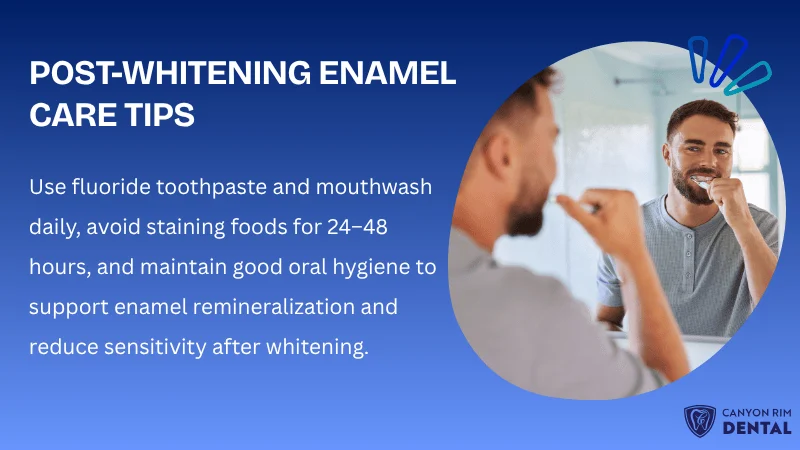
Role of Fluoride Toothpaste and Mouthwash
Fluoride toothpaste plays a key role in protecting enamel after whitening. It helps rebuild weak spots in enamel and lowers the risk of sensitivity.
Brush twice a day with a fluoride toothpaste that carries the ADA Seal or similar approval. Use a soft-bristled toothbrush and gentle pressure. Scrubbing hard does not clean better, and it can wear down enamel over time.
Add a fluoride mouthwash once a day, especially at night. Swish for the full time listed on the label, usually 30 to 60 seconds. Do not rinse with water right after, so the fluoride can stay on your teeth longer.
Some dentists also suggest a high-fluoride gel if you have strong sensitivity. Ask your dental professional before using these products. They can check your enamel and recommend the right strength for you.
Avoiding Staining Foods and Drinks
Right after whitening, your teeth can absorb color more easily. This makes it important to avoid common staining foods and drinks for at least 24 to 48 hours.
Limit items like:
- Coffee and tea
- Red wine
- Cola and dark sodas
- Soy sauce and tomato sauce
- Berries
If you do drink coffee or tea, use a straw when possible. Rinse your mouth with water soon after. This simple step helps wash away pigments before they settle into enamel.
Tobacco also stains teeth and affects gum health. Avoiding it supports both your enamel and your long-term white smile.
Choose lighter foods during the first few days. Think chicken, rice, yogurt, eggs, and milk. These options are less likely to stain and easier on sensitive teeth.
Supporting Remineralization with Oral Hygiene
Your mouth has a natural repair system. Saliva contains minerals like calcium and phosphate that help strengthen enamel through a process called remineralization.
You can support this process with steady oral hygiene habits. Brush twice daily, floss once a day, and avoid skipping nighttime care. Plaque buildup can trap acids against enamel and slow repair.
Drink water often, especially after meals. Water helps rinse away acids and supports healthy saliva flow. Sugar-free gum can also increase saliva, which may help reduce acid levels.
Wait at least 30 minutes to brush after eating acidic foods. Brushing too soon can spread acid and weaken enamel. Giving your mouth time to rebalance protects the surface of your teeth and helps maintain your whitening results.
Choosing the Right Whitening Products
You can protect your enamel by choosing whitening products that match your needs and oral health. Look for trusted approvals, lower-risk formulas, and clear directions before you start.
Whitening Toothpaste and ADA Approval
Whitening toothpaste works by using mild abrasives to scrub away surface stains. Some also use small amounts of peroxide to lighten stains just below the surface.
Check for the ADA Seal of Acceptance on the package. This seal means the product meets safety and effectiveness standards. It also shows the toothpaste will not harm enamel when you use it as directed.
Not all whitening toothpaste is the same. Some rely heavily on abrasive ingredients. If you brush too hard or use them too often, you can wear down enamel over time.
Use a soft-bristled toothbrush and gentle pressure. Brushing harder will not whiten faster, but it can increase enamel wear.
Sensitivity-Safe Options
If your teeth feel sensitive, choose whitening products made for sensitive teeth. These often contain ingredients like potassium nitrate or fluoride. These help calm the nerves inside your teeth and strengthen enamel.
Professional whitening can also reduce risk. Dentists adjust the strength of peroxide and protect your gums during treatment. Research shows that professional whitening does not damage healthy enamel when used as directed.
At-home strips and trays can be safe too, but follow the instructions exactly. Do not leave them on longer than directed. Give your teeth time to rest between treatments.
If sensitivity lasts more than a few days, stop whitening and talk to your dentist.
What to Avoid in Whitening Products

Avoid products that promise extreme results in one day. Very high peroxide levels can increase tooth sensitivity and irritate your gums.
Be careful with frequent use. Using strips or gels too often can make teeth look chalky and feel rough.
Some experts warn that overuse may lead to enamel changes and sensitivity, which you can read about in this guide on whether teeth whitening can damage enamel.
Skip DIY trends like charcoal scrubs or acidic home remedies. These can scratch or erode enamel. Once enamel wears away, it does not grow back.
Stick with products that list clear ingredients, clear timing, and safe use directions. Your enamel depends on it.
Frequently Asked Questions
Teeth whitening can change the color of your teeth, but it can also affect enamel strength and tooth sensitivity. The level of risk depends on the product, how often you use it, and whether a dentist supervises your care.
Are there potential risks to enamel from teeth whitening treatments?
Yes, some whitening treatments can reduce enamel hardness for a short time.
A clinical study on different methods found that in-office bleaching caused the greatest drop in enamel microhardness, while over-the-counter products caused the least change, as shown in this research on effects of whitening agents on enamel microhardness.
Higher levels of hydrogen peroxide tend to create stronger whitening effects, but they can also increase enamel changes. Overuse and ignoring instructions raise your risk.
When you follow directions and space out treatments, enamel often recovers over time.
How can I safely whiten my teeth at home without harming my enamel?
Start by choosing products with lower peroxide levels. Many at-home kits use lower strengths than in-office systems, which may reduce enamel stress.
Follow the timing instructions exactly. Do not leave strips or trays on longer than directed, and avoid back-to-back treatments.
Talk with your dentist before you begin. They can check for cavities, thin enamel, or gum problems that could make whitening unsafe for you.
What precautions should I take to prevent enamel damage during professional teeth whitening?
Ask your dentist about the peroxide strength they plan to use. In-office systems often use higher concentrations, which can affect enamel more than milder options.
Make sure your dentist examines your teeth first. Treating decay or worn enamel before whitening lowers your risk of problems.
After treatment, use fluoride toothpaste and avoid acidic drinks for a short time. This helps your enamel stay strong while it recovers.
Can regular use of teeth whitening strips have negative effects on enamel health?
Using whitening strips too often can dry out enamel and increase surface changes.
Research comparing methods found that over-the-counter products caused smaller hardness changes than in-office systems, but changes still occurred, according to this study on in-office, at-home, and OTC whitening effects.
If you use strips more often than recommended, you raise your risk of sensitivity and enamel stress. Stick to the schedule listed on the package.
Give your teeth time to rest between whitening cycles.
Will I experience increased tooth sensitivity after whitening, and how does this relate to enamel care?
You might notice short-term sensitivity after whitening. Peroxide can pass through enamel and irritate the inner tooth layer.
Sensitivity does not always mean permanent damage. It often fades within a few days.
Use toothpaste made for sensitive teeth and avoid very hot or cold drinks right after treatment. These steps help protect your enamel while it stabilizes.
Are there differences in enamel safety between over-the-counter and dentist-provided whitening treatments?
Yes, the main difference involves peroxide strength and supervision. In-office treatments often use higher concentrations and can cause a larger short-term drop in enamel hardness.
Over-the-counter products usually contain lower peroxide levels and show smaller changes in enamel hardness in clinical research. However, they may produce slower or less dramatic results.
Dentist-provided care adds monitoring and custom planning. That guidance helps you balance whitening results with enamel protection.