



Porcelain veneers can transform your smile in just a few dental visits, but the real question is whether they hold up over time.
Many patients report that their veneers maintain their color, shape, and strength over time, which is one reason people ask, are porcelain veneers worth it for long-term smile improvement.
Understanding what happens to veneers after a decade helps you make a smart choice about your dental care.
With proper care, porcelain veneers typically last 10 to 15 years or longer, making them a reliable long-term solution for cosmetic dental concerns.
After ten years, you might notice some minor changes like slight discoloration or small chips, but most veneers continue to perform well when you maintain good oral hygiene and regular dental checkups.
The key to getting the most from your veneers lies in understanding how they age and what you can do to protect them.
This review looks at real outcomes after a decade of wear, common issues that arise, and practical steps to keep your smile looking its best for years to come.
Key Takeaways
- Porcelain veneers usually last 10 to 15 years with good care and regular dental visits
- Your daily habits, like grinding teeth or biting hard foods, can shorten how long veneers last
- Porcelain veneers are more durable than composite options and provide better long-term value
Porcelain Veneers: What to Expect Over 10 Years
Most porcelain veneers last between 10 and 15 years with proper care, though individual results vary based on materials, placement technique, and daily habits.
Understanding survival rates, typical wear patterns, and what patients experience can help you set realistic expectations.
Average Lifespan and Survival Rates
Porcelain veneers typically last 10 to 15 years, making them a durable option for improving your smile. Research shows that up to 95% of veneers remain functional after 10 years, with survival rates around 85% at the 15-year mark.
Your veneers’ lifespan depends on several factors. The quality of ceramic materials used affects durability and resistance to wear. The skill of your dentist during placement matters too, as proper tooth preparation and bonding techniques contribute to long-term success.
Most patients can expect their veneers to last between 10 and 20+ years. This wide range reflects differences in individual care habits.
Your daily oral hygiene routine, diet choices, and whether you grind your teeth at night all play important roles in how long your dental veneers will serve you.
Common Signs of Wear and Aging
After several years, you might notice subtle changes in your veneers. The bonding material can weaken over time, which may cause edges to lift slightly or gaps to form between the veneer and your natural tooth.
These changes usually develop gradually rather than suddenly.
Surface wear is another common sign. Your veneers may lose some of their original shine or develop minor scratches from daily use. Staining rarely affects the porcelain itself, but the cement at the edges can discolor.
Signs to watch for include:
- Chipping or small cracks in the veneer surface
- Changes in how your bite feels
- Sensitivity when eating hot or cold foods
- Dark lines appearing at the gum line
- Loose or wobbly veneers
What happens to porcelain veneers after 10+ years often involves minor cosmetic concerns rather than structural failures. Many patients find their veneers still function well but may want refreshing for aesthetic reasons.
Clinical and Patient-Reported Outcomes
Studies tracking patient satisfaction show high success rates with ceramic veneers over the 10-year period. Most people report feeling happy with their decision and would choose veneers again.
From a clinical standpoint, dentists observe good tissue health around well-maintained veneers. Your gums typically adapt well to the porcelain surface when you maintain proper oral hygiene. Regular dental checkups help catch potential issues early.
Patient experiences vary based on individual expectations and care routines. Those who avoid hard foods, wear nightguards if needed, and brush gently tend to report better outcomes. You’ll likely feel your veneers become a natural part of your smile over time.
Key outcome measures include:
- Functionality: Ability to eat and speak normally
- Aesthetics: Maintaining color and shape consistency
- Comfort: No pain or sensitivity during daily activities
- Gum health: Pink, firm tissue around veneer margins
Your commitment to maintenance directly impacts your long-term results. Most patients find the care requirements manageable and feel the improved confidence in their smile justifies the investment.
Key Factors Influencing the Longevity of Porcelain Veneers
The lifespan of your porcelain veneers depends on several interconnected elements, from the materials your dentist selects to how well you care for them daily.
Understanding these factors helps you make informed decisions and maximize your investment in your smile.
Role of Material Type and Quality
The type of porcelain used in your veneers plays a major role in how long they last. Feldspathic porcelain veneers are among the most common options, known for their natural appearance and ability to mimic tooth enamel.
Higher-quality porcelain materials resist staining and chipping better than lower-grade alternatives. Your dentist’s choice of material affects not just the aesthetic result but also the structural integrity of your veneers over time.
The thickness of the porcelain matters too. Veneers that are too thin may fracture more easily, while those that are properly designed distribute biting forces more evenly.
Modern porcelain formulations have improved dramatically, offering better strength and durability than older versions.
Adhesion and Placement Techniques
How well your veneers are bonded to enamel directly impacts their longevity. The bonding process is critical in prosthodontics, requiring precise technique and attention to detail.
Your dentist must properly isolate the tooth from moisture during bonding. Even small amounts of saliva or blood can weaken the bond between the veneer and your tooth surface. The quality of the adhesive resin and bonding agents also matters significantly.
Proper placement technique ensures that your veneers align correctly with your bite. Veneers placed with incorrect angles or pressure points are more likely to chip or debond over time.
The experience and skill of your dentist becomes especially important during this phase of the procedure.
Patient Habits and Oral Hygiene
Your daily habits have a substantial impact on how long your veneers last. According to research on patient factors that influence porcelain veneer survival, certain behaviors affect outcomes significantly.
Grinding or clenching your teeth puts excessive stress on veneers and can cause cracks or chips. If you have this habit, wearing a night guard protects your investment. Biting hard objects like ice, pens, or fingernails also increases the risk of damage.
Your oral hygiene routine matters too. Brushing twice daily and flossing regularly prevents gum disease that could compromise the tooth structure supporting your veneers. Regular dental checkups allow your dentist to catch potential issues early.
Patients who change dentists frequently experience shorter veneer lifespans compared to those who maintain consistent care with the same provider.
Tooth Preparation and Underlying Oral Health
The condition of your natural teeth before veneer placement affects long-term success. Your dentist needs to prepare your teeth properly, removing just enough enamel to create a strong bonding surface without weakening the tooth structure.
Teeth with existing decay, large fillings, or cracks make poor candidates for veneers. These underlying issues must be addressed first to ensure a stable foundation. Root canal-treated teeth may also have different survival rates than healthy teeth.
Your age and overall oral health play a role too. Studies show that patients 60 years or older experience poorer survival of porcelain veneers compared to younger patients. This may relate to age-related changes in tooth structure and bone density.
Strong, healthy teeth with adequate enamel provide the best foundation for long-lasting veneers.
Complications and Challenges Seen After 10 Years
While porcelain veneers show strong survival rates, they can develop specific problems over time.
Research shows that fracture is the most common complication of porcelain veneers, followed by debonding, with both issues typically occurring within the first few years after placement.
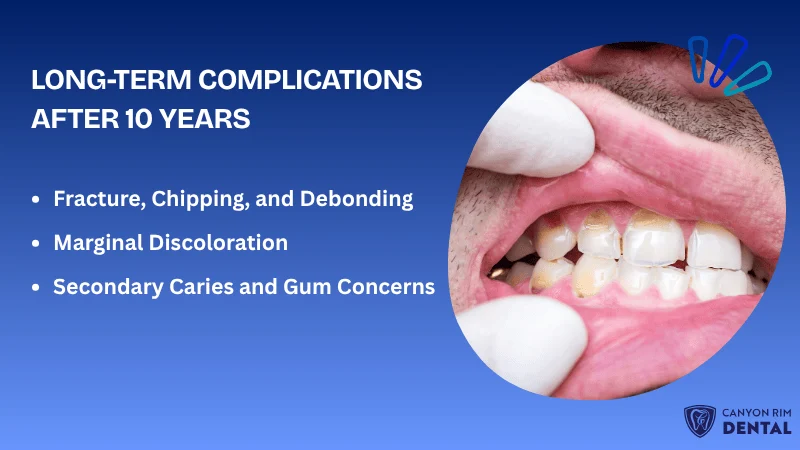
Fracture, Chipping, and Debonding
Fracture represents the leading cause of veneer failure after a decade of wear. If you have feldspathic veneers, you face a higher fracture risk compared to non-feldspathic options.
The material can crack or chip when exposed to hard foods or grinding forces over time.
Debonding occurs when the adhesive bond between your veneer and tooth weakens. Studies indicate a 99.2% 10-year survival rate when debonding alone is considered as failure. This means debonding affects a small percentage of veneers, but it remains a concern.
Your risk increases if you have bruxism or clench your teeth at night. Veneers without incisal coverage show higher failure rates than those that cover the biting edge.
When debonding happens, you’ll notice the veneer feels loose or falls off completely, requiring rebonding or replacement.
Marginal Discoloration
Marginal discoloration develops at the edges where your veneer meets your natural tooth. This occurs as the cement ages or if microscopic gaps form between the restoration and tooth surface. You might see a dark line or yellow tint along the gum line.
The appearance of marginal discoloration doesn’t always mean your veneer has failed functionally. However, it impacts the esthetic result you initially wanted.
Some patients find this discoloration acceptable, while others request veneer replacement to restore their smile’s appearance.
Good oral hygiene helps slow this process, but you can’t prevent it entirely. The cement material naturally changes color over many years of exposure to foods, drinks, and bacteria.
Secondary Caries and Gum Concerns
Secondary caries can develop at the margins of your veneers after years of wear. The 10-year survival rate when secondary caries is considered as a failure reason is 99.3%, showing this complication affects very few veneers.
Cavities form when bacteria accumulate at the junction between your tooth and veneer.
Your gums may recede over time, exposing the edge of the veneer or the prepared tooth structure underneath. This creates both an esthetic concern and potential sensitivity.
Gum recession is a natural aging process but can worsen with aggressive brushing or periodontal disease.
Regular dental cleanings and proper home care significantly reduce your risk of developing secondary caries around veneers. If decay does occur, your dentist must remove the veneer to treat the cavity, which usually means you’ll need a replacement veneer.
Porcelain vs. Composite Veneers: Durability and Value
Porcelain veneers typically last 10-20 years with survival rates above 90%, while composite veneers average 5-7 years before needing repair or replacement. The price difference between these two materials becomes less significant when you calculate the cost per year of use.
Comparing Longevity and Complications
Porcelain veneers show survival rates of 91-96% at 10 years, with some ceramic veneers lasting 15-20 years or more. Composite veneers typically require replacement after 5-7 years of normal use.
The difference comes down to material strength and stain resistance. Porcelain resists staining from coffee, tea, and wine much better than composite resin.
Your composite veneers will also show surface wear faster, especially if you use whitening toothpaste with abrasive ingredients.
Complications vary between the two types. Porcelain veneers can chip or debond, particularly if you grind your teeth at night. Composite veneers are easier to repair in a single visit, but they need more frequent polishing to maintain their appearance.
If you have bruxism (teeth grinding), porcelain veneers face higher fracture risk without a night guard. Patients who skip wearing their night guard can experience failure rates up to eight times higher than those who wear one consistently.
Cost-Effectiveness Over a Decade
Composite veneers cost $250-$1,500 per tooth, while porcelain veneers range from $1,000-$2,500 per tooth. That upfront difference looks significant until you calculate longevity.
Here’s how the costs compare over 10 years:
| Veneer Type | Cost Per Tooth | Replacements in 10 Years | Total 10-Year Cost |
| Composite | $250-$1,500 | 1-2 replacements | $500-$4,500 |
| Porcelain | $1,000-$2,500 | 0 replacements | $1,000-$2,500 |
Composite veneers offer lower upfront costs but shorter lifespans, which means you’ll pay for replacement procedures. Each replacement also means additional time off work and repeated dental visits.
Porcelain veneers often cost less per year when you factor in their durability. You’re paying once for a restoration that can last two decades with proper care, rather than replacing composite veneers multiple times.
Best Practices to Maximize Veneer Success
Proper care routines and clear communication with your dentist play major roles in how long your veneers last. These two factors often determine whether your investment pays off over a full decade or requires earlier intervention.
Ongoing Dental Care and Maintenance

Your daily habits directly impact veneer longevity. Brush twice daily with a non-abrasive toothpaste and use a soft-bristled brush to avoid scratching the porcelain surface.
Floss daily to prevent gum disease, which can compromise the fit and appearance of your veneers. Regular dental cleanings every six months help maintain the bond between your tooth and the veneer while catching potential problems early.
Avoid using your veneered teeth as tools to open packages or bite hard objects like ice and pen caps. These actions can crack or chip the porcelain. If you grind your teeth at night, wear a custom nightguard to protect your veneers from excessive force.
Proper tooth preparation and case selection during the initial placement strongly influences long-term outcomes. Your dentist in prosthodontics should evaluate whether you’re a good candidate before proceeding.
Managing Patient Expectations
Understanding what dental veneers can and cannot do prevents disappointment down the road. Your veneers will improve the appearance of discolored, chipped, or slightly misaligned teeth, but they’re not indestructible.
Discuss realistic timelines with your dentist. While many veneers last 10-15 years, some may need replacement sooner depending on your oral habits and natural tooth changes.
Ask specific questions about maintenance requirements and potential complications before committing.
Your dentist should explain how factors like tooth preparation depth and bonding technique affect durability. Research shows that the strength of the bond between your tooth, the luting composite, and the porcelain veneer determines overall success.
Schedule follow-up appointments as recommended to monitor veneer condition and address minor issues before they become major problems.
Frequently Asked Questions
Porcelain veneers last between 10 and 15 years with proper care, though some patients maintain them for 20 years or longer. The main factors affecting their lifespan include teeth grinding, oral hygiene habits, and the quality of initial placement.
What kind of maintenance do porcelain veneers require over time?
Caring for porcelain veneers is similar to caring for your natural teeth. You need to brush twice daily with a soft-bristled toothbrush and non-abrasive toothpaste.
Flossing once a day removes plaque from the margins where your veneers meet your natural teeth. This prevents decay from developing underneath the veneers.
You should visit your dentist every six months for professional cleanings and checkups. These appointments allow your dentist to spot any early signs of wear or damage.
If you grind your teeth at night, wearing a custom night guard protects your veneers from cracking. Using non-alcoholic mouthwash helps preserve the bonding agents that hold your veneers in place.
How often do porcelain veneers need to be replaced?
Most people need to replace their porcelain veneers after 10 to 15 years. With excellent care, many patients extend this timeline to 20 years or more.
The replacement timeline depends on how well you maintain them and protect them from damage. Teeth grinding can cut the lifespan in half if you don’t wear a protective night guard.
Clinical studies show that well-maintained veneers have survival rates above 90% at the 10-year mark. Your individual results depend on your oral hygiene habits and lifestyle factors.
Are there any common complications with porcelain veneers after a decade?
The most common issues after 10 years include chips, cracks, or discoloration at the margins where the veneer meets your tooth. Gum recession can expose the edge of the veneer or the underlying tooth structure.
You might notice dark lines appearing at the gumline as the bonding cement ages. Some patients experience increased sensitivity to hot or cold temperatures.
Debonding can occur when the adhesive weakens over time, making the veneer feel loose. If you notice any of these problems, you should schedule an evaluation with your dentist promptly.
Minor chips may be repairable without full replacement. Debonding requires immediate attention to prevent decay in the exposed tooth.
Can porcelain veneers improve dental health in the long run, or do they present risks?
Porcelain veneers primarily serve a cosmetic purpose rather than improving your dental health directly. They protect the front surface of your teeth from staining and minor wear.
The main risk involves the removal of a thin layer of tooth enamel during placement. This process is permanent and means you’ll always need veneers or another restoration on those teeth.
Poor oral hygiene with veneers can lead to decay at the margins or gum disease. The underlying tooth structure remains vulnerable to cavities if plaque builds up around the edges.
Your natural teeth stay healthier when you maintain good oral hygiene practices with your veneers. Regular dental checkups help catch any issues before they become serious problems.
What factors influence the longevity of porcelain veneers?
Teeth grinding poses the biggest threat to how long your veneers last. The repetitive force can crack or chip the porcelain, significantly reducing its lifespan.
The quality of materials and placement technique affects durability. Premium ceramics from reputable dental laboratories outperform lower-cost alternatives.
Your daily habits matter too. Avoiding hard foods like ice and nuts prevents damage. Using your teeth as tools to open packages can chip or crack your veneers.
Bite alignment plays a role in veneer longevity. Uneven bite distribution concentrates force on certain teeth, increasing stress on those veneers.
Your oral hygiene routine protects both the veneers and underlying tooth structure. Poor care causes gum recession that exposes veneer edges.
What are the financial considerations for maintaining porcelain veneers over 10 years?
Porcelain veneers typically cost between $1,000 and $3,000 per tooth in the United States. You need to budget for replacement after 10 to 15 years, which means another full investment.
Regular dental checkups and cleanings add to the ongoing costs. Most dental insurance plans classify veneers as cosmetic and don’t cover them.
You might need to replace a custom night guard every few years if you grind your teeth. Minor repairs for chips may cost less than full replacement, but not all damage is repairable.
Premium veneers cost more upfront but often last longer than cheaper alternatives. Replacing lower-quality veneers every 7 to 8 years ultimately costs more than investing in quality restorations that last 15 to 20 years.