


Many people want to fix their smile without metal braces showing. Clear aligners work well for lots of dental problems, but you might wonder if they can handle more serious issues.
SureSmile aligners can fix some severe bite problems, but the most serious cases usually need traditional braces or surgery instead.
The good news is that clear aligners can address many bite issues ranging from overbite to underbite and crossbite. The success depends on how bad your bite problem is and what’s causing it.
Your orthodontist will look at your teeth and jaw to decide if clear aligners are right for you.
Understanding what clear aligners can and cannot fix helps you make the best choice for your dental health. Some bite problems are too complex for plastic trays alone.
Reading this guide will help you learn when clear aligners work for severe bites and when you might need a different treatment.
Key Takeaways
- Clear aligners work for mild to moderate bite problems but severe cases often require braces or surgery
- The type and severity of your bite issue determines whether clear aligners will be effective for you
- Treatment success with clear aligners depends on following your orthodontist’s plan and wearing the aligners as directed
Table of Content
- Understanding Severe Bite Problems
- How Clear Aligners Work for Severe Bite Correction
- Effectiveness of Clear Aligners for Different Severe Bite Issues
- Limitations and When Braces or Surgery May Be Needed
- Considerations for Clear Aligner Treatment Success
- Costs, Benefits, and Lifestyle Factors
- Frequently Asked Questions
Understanding Severe Bite Problems
Bite problems occur when your upper and lower teeth don’t fit together properly, which can range from mild alignment issues to severe malocclusion that affects your jaw function and daily comfort.
The severity depends on how far your teeth are misaligned and whether the problem involves just your teeth or your entire jaw structure.
Types of Bite Issues: Overbite, Underbite, Crossbite, and Open Bite
An overbite happens when your upper front teeth overlap your lower front teeth too much. While a small amount of overlap is normal, a severe overbite means your upper teeth cover most or all of your lower teeth when you close your mouth.
An underbite is the opposite problem. Your lower teeth stick out past your upper teeth when your jaw is closed. This gives your lower jaw a protruding appearance and can make chewing difficult.
A crossbite occurs when some of your upper teeth sit inside your lower teeth instead of outside them. This can happen on one side of your mouth or both sides. Clear aligners can address crossbites along with other common bite issues.
An open bite means your front teeth don’t touch at all when your back teeth are closed together. You’ll see a gap between your upper and lower front teeth even when you bite down completely.
Causes and Risks of Severe Malocclusion
Genetics plays a major role in bite problems. If your parents had jaw misalignment or crowding, you’re more likely to develop similar issues.
Childhood habits can contribute to malocclusion too. Thumb sucking, prolonged pacifier use, and tongue thrusting can push your teeth out of position over time. These habits affect how your jaw develops during critical growth years.
Missing teeth or overcrowding also leads to bite issues. When you lose a tooth, the surrounding teeth can shift into the empty space. Overcrowding forces teeth to twist or overlap, which throws off your bite alignment.
Jaw injuries or developmental problems can create severe bite problems that involve your bone structure, not just your teeth position.
Impact on Oral Health and Daily Life
Severe bite problems cause uneven tooth wear because some teeth hit harder than others when you chew. This wears down your enamel faster and can lead to sensitivity or cavities.
Jaw pain is common with malocclusion. Your jaw joints work harder to compensate for misaligned teeth, which can cause headaches, facial soreness, and clicking sounds when you open your mouth.
You might struggle with chewing certain foods properly. Bite issues make it harder to tear or grind food, which affects your digestion and limits what you can eat comfortably.
Speech problems can develop too. Gaps between teeth or severe overbites sometimes cause lisping or difficulty pronouncing certain sounds clearly.
How Clear Aligners Work for Severe Bite Correction
Clear aligners use advanced technology and customized tools to move your teeth into better positions. For severe bite problems, your treatment requires precise planning and extra devices to achieve the results you need.
Technology Behind Clear Aligners
Modern clear aligners rely on digital scans and 3D imaging to map every detail of your teeth and jaw. Your orthodontist uses these scans to see exactly how your teeth are positioned and where they need to move.
The technology creates a virtual model of your mouth that shows the current state of your bite problem. This digital approach replaces old-fashioned molds that many patients found uncomfortable.
With 3D imaging, your orthodontist can rotate and examine your teeth from every angle to spot issues that might affect your treatment.
The system then generates a step-by-step plan showing how your teeth will shift over time. You can actually see a preview of what your smile will look like at the end of treatment.
This technology makes it possible to predict how well aligners will work for your specific bite issue before you even start wearing them.
Customized Treatment Planning and Digital Tools
Your personalized treatment starts with digital treatment planning software that maps out every tooth movement. The system calculates the exact amount of force needed to shift your teeth and determines how many aligners you’ll need throughout your orthodontic treatment.
For severe cases, the planning gets more complex. Your orthodontist must consider how your jaw relates to your teeth and whether the problem involves both dental and skeletal components.
Research shows that deep bite correction with clear aligners ranges from 0.4 mm to 3.8 mm depending on the severity and treatment approach.
The treatment plan breaks down your correction into small, manageable steps. Each aligner in your series moves your teeth slightly closer to their final position.
Your orthodontist can adjust the plan if your teeth don’t respond as expected, ordering new aligners to keep your progress on track.
Attachments and Additional Orthodontic Appliances
Attachments are small tooth-colored bumps bonded to specific teeth to help your aligners grip better. These tiny buttons give your aligner treatment extra control over difficult tooth movements that severe bite problems require.
For complex cases, you might need additional orthodontic appliances alongside your Invisalign or other clear aligners. Precision bite ramps, for example, are built into the aligners themselves to help correct deep bites.
Elastics or rubber bands might connect your upper and lower teeth to fix misalignment between your jaws.
Your orthodontist places attachments strategically based on which teeth need the most movement. Some attachments help rotate teeth, while others create the leverage needed to move roots or intrude teeth deeper into the bone.
Studies indicate that optimized attachments improve the effectiveness of overbite reduction compared to conventional approaches.
Schedule a consultation to explore personalized solutions for severe bite correction.
Effectiveness of Clear Aligners for Different Severe Bite Issues
Clear aligners work differently depending on which type of severe bite problem you have. The position of your jaw and the amount of tooth movement needed determine whether aligners can successfully fix your specific issue.
Overbite and Severe Overbite Correction
Clear aligners can handle mild to moderate overbite cases quite well. When you have an overbite, your upper front teeth overlap your lower teeth too much.
For severe overbite cases, the results become less predictable. Research shows that clear aligners achieve bite opening between 0.4 mm and 3.8 mm.
The actual correction often falls short of what your orthodontist plans, with accuracy rates between 33% and 48.88%.
Severe skeletal overbites present the biggest challenge. These involve jaw positioning problems rather than just crooked teeth. Traditional braces typically provide better control for these cases.
Your orthodontist may need to plan for overcorrection or multiple refinement stages. This means you might need additional aligner sets to reach your treatment goals.
Treating Underbite and Jaw Positioning
Underbites happen when your lower jaw sits too far forward compared to your upper jaw. Clear aligners can correct many bite issues including some underbites.
The severity matters most with underbite correction. Mild dental underbites respond better to aligner treatment than severe skeletal cases. When your jaw positioning is significantly off, you might need surgery or braces instead.
Your bite correction depends on how much your teeth need to move versus how much your jaw needs to shift. Aligners work by applying gentle pressure to reposition teeth. They have limited ability to change actual jaw bone structure.
Crossbite and Jaw Alignment Complications
A crossbite occurs when some of your upper teeth sit inside your lower teeth when you bite down. This creates jaw alignment problems that can affect one tooth or several teeth.
Clear aligners can fix mild to moderate cases when treatment is carefully planned. Your orthodontist might use special attachments on your teeth to help control the tooth movement better.
Severe crossbites that involve significant jaw misalignment need more intensive treatment. The complicated jaw positioning makes it harder for aligners to create the necessary changes on their own.
Limitations and When Braces or Surgery May Be Needed
Clear aligners work well for mild to moderate bite issues, but severe bite problems often require braces or other appliances to adjust vertical alignment and jaw positioning.
Some cases need the stronger control that traditional orthodontics or surgical intervention can provide.
Cases Where Traditional Braces Are Preferred
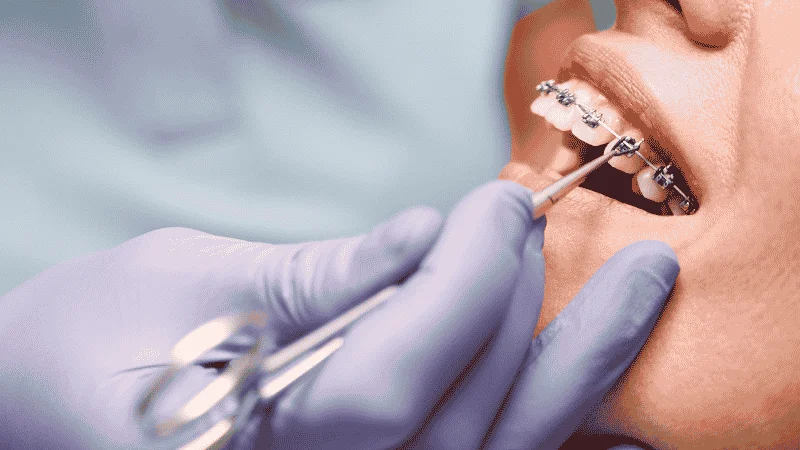
Traditional braces give your orthodontist more control over tooth movement than clear aligners can offer. When you have extreme tooth rotations beyond 20 degrees, traditional metal braces apply more targeted and consistent force to move teeth into proper position.
Vertical tooth movement presents another major limitation. If your treatment requires moving teeth up or down in the gum line, braces with their bracket-and-wire system can pull or push teeth into precise vertical alignment.
Traditional braces are typically needed for:
- Severe overbites or underbites requiring jaw repositioning
- Impacted teeth that haven’t erupted properly
- Multiple tooth extractions requiring complex gap closure
- Cases needing precise root positioning
Your orthodontist might also recommend combining both treatments. You could start with braces to correct major misalignments, then switch to clear aligners for the finishing phase. It is also important to discuss the right age for braces with your orthodontist.
Role of Jaw Surgery in Severe Malocclusions
Some severe bite problems involve skeletal issues where your jaw position itself needs correction. Severe skeletal discrepancies needing jaw surgery can’t be fixed with aligners or braces alone.
Jaw surgery, also called orthognathic surgery, repositions your upper jaw, lower jaw, or both to improve bite function and facial balance. Your oral surgeon and orthodontist work together on these cases.
Severe skeletal malocclusions or complex tooth movements may require traditional braces or surgical intervention when the problem extends beyond what teeth movement alone can fix.
Surgery typically happens first to reposition the jaw bones. Then orthodontics fine-tunes your tooth alignment after your jaw has healed.
This combined approach gives you both proper jaw function and a straight smile when dealing with the most severe cases.
Considerations for Clear Aligner Treatment Success
Success with clear aligners depends on wearing them as directed, keeping your teeth clean, and working closely with your orthodontist throughout treatment. These factors directly affect how well your bite problem gets corrected and how long results last.

Patient Compliance and Oral Hygiene
You need to wear your clear aligners for 20 to 22 hours each day to see results. If you don’t follow this schedule, your treatment takes longer or might not work at all.
Taking out your aligners too often is one of the biggest reasons treatment fails. You should only remove them to eat, drink anything besides water, and clean your teeth.
Some people struggle with this commitment, especially during social events or meals.
Good oral hygiene matters even more with aligners. Food particles and bacteria can get trapped between your teeth and the aligner, which leads to cavities and gum disease.
You must brush and floss after every meal before putting your aligners back in. Clean your aligners daily with a soft toothbrush and clear soap to prevent buildup and odors.
Your orthodontist can track your compliance through regular check-ins and may use special features in the aligners that show how much you’ve worn them.
Treatment Duration and Expected Results
Clear aligner treatment duration varies based on how severe your bite problem is. Mild cases might take 6 to 12 months, while more complex bite issues can require 18 to 24 months or longer.
Your smile transformation happens gradually. You’ll switch to a new set of aligners every one to two weeks, with each set moving your teeth slightly closer to the goal. Don’t expect instant changes.
Factors that affect treatment time:
- Severity of your bite problem
- How well you follow wearing instructions
- Your age and bone density
- Whether you need attachments or other tools
Your orthodontist will give you a treatment plan that estimates how long your specific case will take. Keep in mind that this timeline can change if you don’t wear your aligners enough or if your teeth don’t move as predicted.
Importance of Ongoing Orthodontic Supervision
Regular visits to your orthodontist keep your treatment on track. Monitoring progress during clear aligner therapy helps catch problems early and allows for adjustments when needed.
Your orthodontist checks that your teeth are moving correctly at each appointment. They might need to add attachments, adjust your treatment plan, or address any issues with fit or comfort. These visits typically happen every 6 to 10 weeks.
After your active treatment ends, you’ll need retainers to keep your teeth in their new positions. Your orthodontist will tell you how often to wear them and will monitor your results during follow-up visits.
Without proper retention and supervision, your teeth can shift back toward their original positions.
Professional oversight makes a real difference in whether your bite problem gets fully corrected and stays that way long-term.
Costs, Benefits, and Lifestyle Factors
Clear aligners typically cost between $3,000 and $8,000 depending on your treatment complexity. Beyond price, these trays offer comfort and appearance benefits that make teeth straightening easier to fit into your daily routine.
Aligners Price and Financing Options
The aligners price varies based on how much movement your teeth need. Mild cases of crowded teeth or gapped teeth usually cost less than complex bite corrections. Your treatment might take 6 months or 18 months, which affects the total price.
Most dental offices offer financing options to make treatment affordable. You can often pay monthly instead of all at once. Some practices work with companies like CareCredit or offer in-house payment plans.
Many dental insurance plans now cover part of clear aligner treatment, just like they do for braces.
Check if your provider includes retainers in the total cost. Some practices charge extra for replacement trays if you lose them. Ask about all fees upfront so you know exactly what you’ll pay.
Aesthetic and Comfort Advantages
Clear aligners give you a discreet appearance during treatment. Most people won’t notice you’re wearing them unless they look closely. This matters if you work with clients, appear in photos often, or simply prefer privacy about your dental care.
The trays feel smooth against your cheeks and gums. You won’t deal with metal brackets or wires that can poke or irritate your mouth. You can remove the aligners to eat, brush, and floss normally.
This makes keeping your teeth clean much easier than with fixed braces.
Comparing Discreet Treatment to Other Options
Traditional braces work well for severe problems but are visible and permanent until treatment ends. Clear aligners offer discreet treatment that handles many bite issues while fitting your lifestyle better.
You can take aligners out for important events like weddings or job interviews. With braces, you’re stuck with the metal look until your orthodontist removes them. However, severe bite issues may require braces for effective results.
The trade-off is discipline. You must wear aligners 20 to 22 hours daily for them to work. Braces stay on your teeth constantly, so compliance isn’t an issue.
Frequently Asked Questions
Clear aligners can handle many bite issues, but success depends on the type and severity of your problem. Some movements are harder to achieve than others, and certain conditions may need additional treatment options.
Can Invisalign treat a severe deep bite, and what results are realistic?
Invisalign can treat many deep bite cases, including some severe ones. The aligners work by moving your upper teeth back and your lower teeth forward to reduce the overlap.
For moderate to severe deep bites, your treatment may include special attachments bonded to your teeth. These small bumps help the aligners grip better and create more effective tooth movement.
Realistic results depend on how severe your deep bite is. If your upper teeth cover more than half of your lower teeth, you might see significant improvement but may not achieve a perfect bite.
Very severe cases might need traditional braces or a combination of treatments.
Are clear aligners effective for correcting a severe open bite?
Clear aligners can improve open bite issues by moving your upper and lower teeth into contact when your mouth closes. This type of bite problem is one of the more challenging conditions to fix.
Mild to moderate open bites respond better to clear aligner treatment than severe cases. Your orthodontist might use special elastics or attachments to help close the gap between your teeth.
Severe open bites often involve jaw positioning problems, not just tooth alignment. These cases may require traditional braces or even surgery to get the best results.
How well can clear aligners fix a crossbite compared with braces?
Clear aligners can guide specific teeth outward or inward to fix crossbites effectively. This makes them a good option for many crossbite cases.
Crossbites are actually one of the bite problems that clear aligners handle quite well. The treatment can target individual teeth or groups of teeth that need to move into proper alignment.
Traditional braces might work faster for severe crossbites that involve multiple teeth. However, clear aligners can still achieve good results if you wear them as directed and follow your treatment plan.
What bite problems are clear aligners most likely to struggle with?
Severe cases may require traditional braces or surgery when the problem involves your jaw position rather than just tooth alignment. Clear aligners work best on teeth, not bones.
Major underbites where your lower jaw sits far forward are particularly challenging. These often involve skeletal issues that aligners alone cannot correct.
Extreme overbites or underbites might require more traditional treatments for better control and outcomes. Your orthodontist will determine if your case falls into this category during your consultation.
What is the hardest tooth movement to achieve with Invisalign-style aligners?
Rotating teeth, especially canines and premolars, is one of the most difficult movements for clear aligners. These teeth have rounded roots that resist twisting forces.
Moving teeth vertically up or down in your jawbone (called extrusion and intrusion) also challenges clear aligners. The aligners work better at tipping teeth than at changing their vertical position.
Root movement requires more force and precision than crown movement. Braces can sometimes move roots more predictably because the brackets attach directly to each tooth.
What should I expect from Invisalign before-and-after results for major bite correction?
Advanced 3D imaging lets you preview your bite correction before starting treatment. This gives you a realistic idea of what your smile will look like.
Major bite corrections typically take 18 to 24 months or longer with clear aligners. You should expect gradual changes rather than overnight results.
Your final results depend on how well you wear your aligners and follow instructions. Most patients need to wear aligners 20 to 22 hours per day to stay on track. You might also need refinement trays at the end to perfect your bite.