



Seeing blood in the sink after you floss can be scary, but it does not always mean something is seriously wrong.
In most cases, bleeding gums when flossing is a sign of gingivitis, which is an early and treatable stage of gum disease caused by plaque buildup along the gumline.
Sometimes gum bleeding has nothing to do with disease at all. It can simply mean you are new to flossing, using the wrong technique, or brushing too hard.
Other factors, like hormone changes or certain health conditions, can also play a role in why you notice bleeding when flossing.
The good news is that you have control over your gum health. With the right habits, consistent home care, and professional treatments for gum disease when needed, you can address inflammation early and keep your smile strong for years to come.
Key Takeaways
- Bleeding when you floss is often an early warning sign that your gums need more attention.
- Your flossing habits, brushing technique, and daily routine all affect how healthy your gums stay.
- Seeing a dentist regularly helps catch problems early and keeps your oral health on track.
Table of Content
- What Bleeding During Flossing Usually Means
- Common Causes Beyond Inconsistent Flossing
- How to Floss Without Making Your Gums Bleed
- Build a Routine That Helps Gums Heal
- When to Schedule Professional Care
- Frequently Asked Questions
What Bleeding During Flossing Usually Means
Blood in the sink after flossing usually points to plaque buildup and gum inflammation, not a serious health problem. In most cases, the fix is simple: floss more, not less.
Why Healthy Gums Usually Do Not Bleed
Your gums are tough tissue. When they’re healthy, they can handle daily flossing without any bleeding at all.
Bleeding happens when something has disrupted that healthy state, usually plaque or bacteria sitting along your gumline.
Without regular cleaning, plaque and bacteria buildup along the gumline can lead to gingivitis, which makes your gums swollen and easy to irritate.
Healthy gums are also firm and pale pink. If yours look red, puffy, or feel tender to the touch, that’s a sign something is off.
So while a little blood here and there isn’t automatically alarming, it’s your body telling you your gums need more attention. Think of it as an early warning sign, not something to panic about.
When Starting Daily Flossing Can Cause Temporary Bleeding
If you’re new to flossing or getting back into the habit after a break, don’t be surprised if your gums bleed a bit at first. This is actually pretty normal.
Your gums may be inflamed from weeks or months without proper cleaning between your teeth. New flossers or those returning after a break often notice bleeding that improves with gentle, consistent flossing.
Here’s the good news: this kind of bleeding is usually temporary. Stick with daily flossing, and you should notice less bleeding within a week or two as your gums get healthier and stronger.
If bleeding continues past two or three weeks despite consistent flossing, it’s worth mentioning to your dentist at your next visit.
How Plaque Triggers Gum Inflammation
Plaque is a sticky film of bacteria that builds up on your teeth throughout the day. When it’s not removed through brushing and flossing, it settles along your gumline and between your teeth.
Your body reacts to this bacteria by sending more blood flow to the area, which causes inflammation. This is what makes your gums swollen, tender, and prone to bleeding.
In most cases, bleeding gums are caused by plaque buildup that irritates the gums and leads to inflammation, a stage known as gingivitis.
Understanding the stages of gum disease can help you see why treating these early signs matters before the condition progresses.
The cycle works like this:
- Poor oral hygiene lets plaque build up
- Plaque irritates your gums, causing inflammation
- Inflamed gums become sensitive and bleed easily
- Bleeding gums make you want to floss less
- Less flossing lets plaque build up even more
Breaking this cycle starts with daily flossing, even when your gums feel a little sensitive at first.
Common Causes Beyond Inconsistent Flossing
Sometimes bleeding gums have nothing to do with how often you floss. Your gums can bleed because of hardened plaque, hormone shifts, or even something going on inside your body.
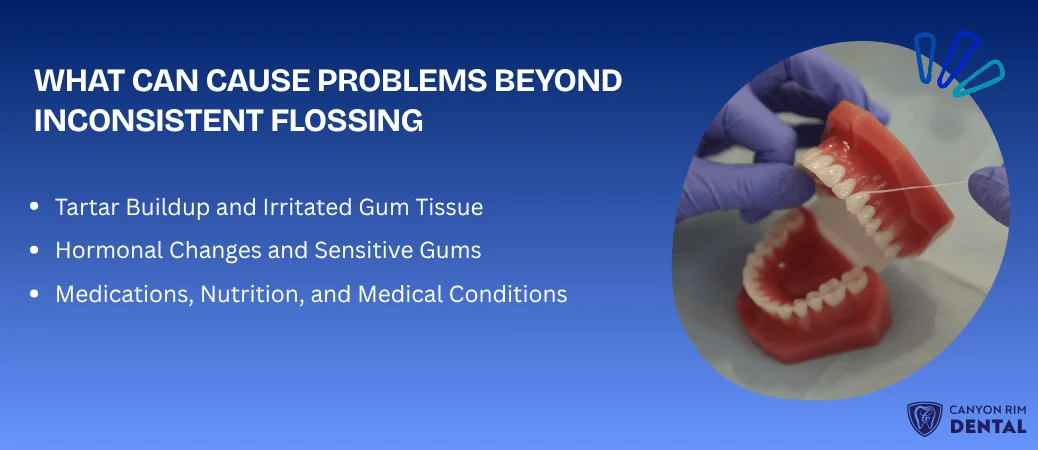
Tartar Buildup and Irritated Gum Tissue
Plaque that sits on your teeth too long can harden into tartar. Understanding the difference between plaque and tartar can help explain why brushing and flossing alone cannot remove hardened buildup.
Tartar buildup creates a rough surface along your gum line. This traps even more bacteria and keeps your gums irritated.
Over time, this irritation leads to swelling and bleeding almost every time you floss. Only a dentist or hygienist can remove tartar with special tools.
This is one of the more common causes of bleeding gums that flossing better won’t fix on its own. If you notice a hard, yellow, or brown layer near your gum line, it’s likely tartar.
Regular cleanings help stop this cycle before it turns into something more serious.
Hormonal Changes and Sensitive Gums
Your hormones affect blood flow to your gums, and this can make them more sensitive. This happens a lot during puberty, your menstrual cycle, pregnancy, and menopause.
During pregnancy, many people develop something called pregnancy gingivitis. This causes gums to swell and bleed more easily, even with a normal flossing routine.
Hormonal changes during your period can have a similar effect for a few days each month. Gums may feel puffier or bleed a little more than usual.
Smoking can also affect your gum health, though in a different way. It hides some of the warning signs of gum disease, so bleeding might actually be less noticeable even when damage is happening underneath.
Medications, Nutrition, and Medical Conditions
Some medications can make your gums bleed more, even if you floss gently. Blood thinners and aspirin lower your blood’s ability to clot, so small irritations bleed more than they normally would.
Certain health conditions play a role too. Diabetes, leukemia, and other blood disorders can affect how your gums heal and how easily they bleed.
Your diet matters as well. Low levels of vitamin C or vitamin K can weaken gum tissue and slow healing, making bleeding more likely.
Eating a balanced diet with enough fruits, vegetables, and nutrients supports stronger, healthier gums. If you take medication or have a health condition and notice ongoing bleeding, it’s worth mentioning to your doctor or dentist.
How to Floss Without Making Your Gums Bleed
The right flossing technique can make a big difference in how your gums feel and look. Small changes in how you hold the floss and move it around your teeth can stop bleeding and protect your gums from harm.
The C-Shape Method for Cleaning Each Tooth
Good flossing technique starts with the right shape. Instead of snapping the dental floss straight down between your teeth, curve it into a “C” shape around each tooth.
This lets the floss hug the side of the tooth and slide gently below the gumline. Move the floss up and down a few times before moving to the next tooth.
Use a fresh section of floss for each gap. This keeps bacteria from spreading and helps you clean each spot more effectively.
Take your time. Rushing through this step is one of the most common reasons people end up with sore or bleeding gums.
Mistakes That Can Cut or Irritate Gums
Even with good intentions, small errors in flossing technique can hurt your gums. One of the biggest mistakes is flossing too hard, which can cut into soft tissue and cause pain or bleeding.
Snapping the floss down too fast is another common issue. This can bruise the gum tissue between your teeth instead of cleaning it.
Here are a few signs of incorrect flossing technique to watch for:
- Snapping the floss instead of gliding it into place
- Sawing motions that irritate the gum line
- Skipping the back teeth, which can leave plaque behind
- Reusing the same section of floss, which spreads bacteria
If you notice ongoing gum irritation, it may be a sign that your method needs an update, not that you should stop flossing altogether.
Choosing Between String Floss, Picks, and Water Flossers
Not everyone finds traditional string floss easy to use, and that is okay. Floss picks can be a helpful option if you struggle with hand coordination or find string floss awkward.
They still require a gentle touch, though. Pushing too hard with a pick can cause the same irritation as improper flossing technique with string floss.
A water flosser is another good option, especially if you have sensitive gums or braces. It uses a stream of water to clean between teeth and along the gumline without much friction.
Water flossers may not fully replace string floss, but they can be a helpful addition to your routine.
Build a Routine That Helps Gums Heal
A few small changes to your daily habits can calm irritated gums and stop bleeding within a week or two.
The right tools, a consistent flossing habit, and some smart product choices all work together to support healthy gums.

Brush Gently Along the Gumline
Your toothbrush choice matters more than you might think. A soft-bristled toothbrush cleans just as well as a hard one, but it won’t scrape or bruise your gum tissue.
If you’ve been using a hard-bristled toothbrush, switching can make a real difference in how your gums feel.
Angle the bristles toward your gumline at about 45 degrees, then use small, gentle circles instead of hard back-and-forth strokes.
An electric toothbrush can help here too, since many models have built-in timers and pressure sensors that stop you from pressing too hard.
Pair your brushing with a fluoride toothpaste to protect your enamel while you focus on technique. Brush for two full minutes, twice a day, and give your gumline the same attention you give your teeth.
Keep Up Daily Between-Tooth Cleaning
Brushing and flossing together is what really keeps plaque under control. Your toothbrush can’t reach the tight spaces between your teeth, and that’s exactly where plaque loves to build up.
If your gums bleed when you first start flossing again, don’t stop. Bleeding usually means those areas have been inflamed for a while, and consistent flossing helps calm that irritation over time.
Curve the floss around each tooth in a gentle C-shape rather than snapping it against your gums. Try to floss once a day, ideally before bed, so plaque doesn’t sit undisturbed overnight.
Know When Mouthwash and Diet May Help
An antibacterial mouthwash or antimicrobial mouthwash can add an extra layer of protection by reducing the bacteria that cause plaque and bad breath.
These rinses aren’t a replacement for brushing and flossing, but they can support your routine, especially if your gums are already inflamed.
Your diet plays a role too. Getting enough vitamin C and vitamin K helps keep gum tissue strong and supports normal healing.
Combining these habits with regular oral hygiene checkups is a core part of preventive dentistry and helps protect your long-term oral health.
When to Schedule Professional Care
Certain symptoms mean it’s time to stop waiting and pick up the phone. Here’s how to spot the warning signs, what your dentist will check during your visit, and which treatments can bring your gums back to health.
Warning Signs of Periodontitis
Call your dentist if you notice persistent gum bleeding that doesn’t ease up after a few days of gentle brushing and flossing.
Persistent bad breath that mouthwash can’t mask is another red flag, since it often means bacteria are trapped below the gumline.
Watch for gum recession or receding gums, which can make your teeth look longer than before.
Loose teeth or a bite that suddenly feels different can mean periodontitis, also known as periodontal disease, has moved into a more advanced stage.
Left untreated, advanced gum disease can lead to bone loss and even tooth loss. These symptoms are worth a same-week call, not a wait-and-see approach.
Knowing the early warning signs of gum disease can help you seek care before the condition becomes more difficult to manage.
What Happens During a Dental and Periodontal Evaluation

At your dental appointment, your dentist starts with a full dental exam of your teeth and gums. This includes a periodontal evaluation, where a small probe measures the space between your gums and teeth.
Deeper pockets usually point to more advanced disease.
Your dentist may also take X-rays to check for bone loss around the tooth roots.
If your exam shows signs of more advanced gum disease, your dentist can determine the appropriate periodontal treatment based on the severity of the condition.
Most visits also include a professional dental cleaning to clear away tartar buildup that brushing alone can’t remove, which gives your dentist a clearer look at your gum tissue.
It’s a good idea to consult a dental professional as soon as bleeding becomes a regular pattern.
Professional Treatments for Gum Disease
Mild irritation often clears up with routine dental cleanings that remove hardened tartar along the gumline.
For more advanced periodontal disease, your dentist may suggest scaling and root planing, a deep cleaning that smooths the tooth roots so your gums can reattach.
Proper care after scaling and root planing can also support healing and help reduce the risk of recurring inflammation.
Ongoing periodontal therapy, paired with regular checkups, helps keep the disease from coming back. Treating gum disease early matters for more than just your mouth.
Research has connected periodontal disease to a higher risk of heart disease and other health problems, including stroke.
Getting the right gum disease treatment now protects both your smile and your long-term health.
Frequently Asked Questions
Bleeding gums during flossing can happen for a few different reasons, from simple technique issues to early gum disease.
Here are answers to some common questions to help you understand what your gums might be telling you.
Is it normal for my gums to bleed when I first start flossing?
Yes, a little bleeding is common when you’re getting back into a flossing routine. If you haven’t flossed in a while, your gums may be a bit tender and react to the new pressure.
This kind of bleeding usually fades within a week or so as your gums adjust. If it doesn’t stop or gets worse, that’s a sign something else might be going on.
Could bleeding while flossing be a sign of gingivitis?
Yes, it can be. Gingivitis often develops when plaque builds up along the gumline, and the bacteria in that plaque irritate your gum tissue.
This irritation causes swelling and makes your gums bleed more easily, even with light flossing. The good news is that early gum disease can often be reversed when gingivitis is caught early and you stay consistent with good oral care.
How can I floss without hurting or irritating my gums?
Start by gently guiding the floss between your teeth instead of snapping it down hard. Curve the floss into a C-shape around each tooth so you’re cleaning the surface, not jabbing your gums.
Using the wrong type of floss can also cause damage. If regular floss feels too sharp or rough, try a soft floss pick or a water flosser instead.
Take your time and don’t rush through it. Slow, careful flossing every day is much better for your gums than fast, forceful flossing once in a while.
How long should gum bleeding last after improving my flossing routine?
Once you start flossing gently and consistently, you should notice less bleeding within about one to two weeks. Your gums need a little time to heal and get used to the daily cleaning.
If you’re still seeing blood after two weeks of steady, careful flossing, it’s worth checking in with your dentist. That could mean there’s a deeper issue that needs attention.
What other symptoms might suggest I have gum disease?
Bleeding isn’t the only sign to watch for. Look out for red, swollen, or tender gums, since healthy gums are usually pink and firm.
Bad breath that doesn’t go away, even after brushing, can also be a clue. So can gums that seem to be pulling away from your teeth, making your teeth look longer than before.
If you notice any looseness in your teeth or changes in how your bite feels, don’t ignore it. These symptoms together can point to a more advanced stage of gum disease.
When should I see a dentist about bleeding gums?
If your gums keep bleeding for more than two weeks despite gentle, regular flossing, it’s time to schedule a visit. Regular bleeding can be a sign of early gum disease that needs professional care to fully resolve.
You should also see a dentist sooner if the bleeding is heavy, comes with pain, or shows up alongside swelling or bad breath. A quick checkup can help catch problems early, before they turn into something more serious.