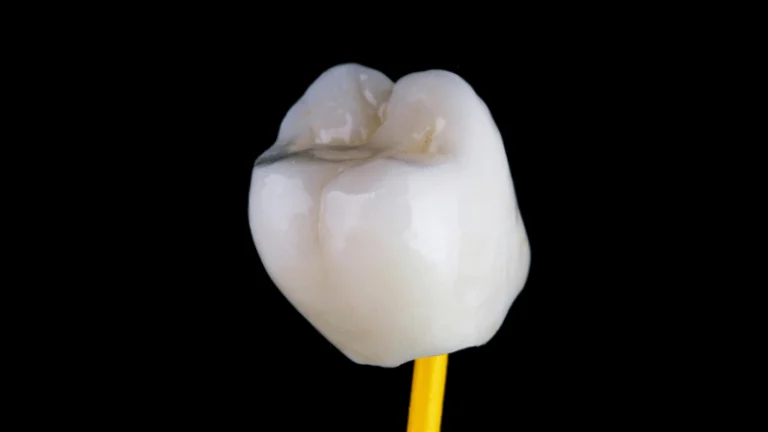

If your dentist just told you that you need a dental crown, you probably have one question on your mind: how fast can this be over?
A crown made in the office in a single visit sounds like the obvious win. But faster treatment and better treatment are not always the same thing.
When comparing CEREC same day crowns vs traditional crowns, both options can protect a damaged tooth and restore its shape.
The real differences show up in how they’re made, what materials are available, and which teeth benefit most from each approach.
The right choice depends less on which technology sounds newer and more on your specific tooth, your bite, and how much natural structure remains to work with.
Some teeth do beautifully with a crown milled in an afternoon. Others, especially front teeth or teeth involved in a bridge, still call for the hand-layered work only a dental laboratory can provide.
Knowing which category your tooth falls into makes this decision much easier.
Key Takeaways
- A same-day crown saves you a second appointment, while a lab crown offers more material choices and finer shade matching.
- Both types of crowns can last 10 to 15 years or longer when the tooth is prepared well and cared for at home.
- Front teeth, heavy grinding, and multi-tooth bridges often still call for a lab-made crown, while single back-tooth crowns are strong candidates for same-day treatment.
Table of Content
- How the Two Crown Workflows Differ
- Time, Comfort, and the Temporary Crown Trade-Off
- Fit, Materials, Appearance, and Durability
- When a Lab-Made Crown Is Still the Better Choice
- How Much Does Each Crown Option Cost?
- Choose the Crown That Fits Your Tooth and Priorities
- Frequently Asked Questions
How the Two Crown Workflows Differ
A same-day CEREC crown is designed and milled in your dentist’s office while you wait.
A traditional crown is shaped from an impression or digital scan, then built by hand at an outside dental laboratory over one to two weeks.
Both aim for the same result: a restoration that covers your prepared tooth and protects it from further damage.
CEREC stands for Chairside Economical Restoration of Esthetic Ceramics, a system built around computer-aided design and manufacturing, often shortened to CAD/CAM technology.
This digital workflow uses an intraoral digital scanner to capture your tooth, CEREC software to design the crown, and an in-office milling unit to carve it from a solid block of ceramic, all in one visit.
What Happens During a Same-Day CEREC Visit?
Your dentist numbs the tooth and removes the damaged or decayed portion, a step called tooth preparation. Instead of a messy putty impression, a digital scanner captures a 3D image of your tooth in a few minutes.
The CEREC software then designs your crown on screen, and the milling unit shapes it from a ceramic block while you wait nearby.
Your dentist checks the fit, adjusts the bite, and bonds the permanent crown in place before you leave, all in one appointment lasting about two to three hours.
If you’re considering this route, it helps to look at same day crowns with CEREC offered at your dental office to see if your tooth is a good candidate.
What Does the Traditional Crown Process Involve?
The traditional crown process starts the same way, with tooth preparation and either a digital impression or a physical mold.
That impression travels to a dental laboratory, where a technician builds your permanent crown by hand using porcelain, zirconia, or another material.
While you wait one to two weeks for the finished restoration, you wear a temporary crown to protect the prepared tooth.
At your second visit, your dentist removes the temporary and bonds the permanent crown, checking fit and bite before you leave.
Time, Comfort, and the Temporary Crown Trade-Off
A same-day crown trades a longer single appointment for freedom from a temporary crown, while a traditional crown spreads shorter visits across one to two weeks with a temporary in between.
Neither pace is right or wrong. It comes down to your schedule and how you feel about wearing a temporary restoration.
A CEREC visit runs about two to three hours from numbing to final bonding, since the scanning, designing, and milling all happen while you’re in the chair.
A traditional crown splits that work into two shorter visits, which some patients actually prefer because it gives them time to sit with the treatment plan before committing to the permanent crown.

When Does One-Visit Treatment Make Sense?
Same-day crowns work well when your schedule makes a second dental visit hard to arrange, or when you’d rather skip wearing a temporary altogether.
A simple crown on a back molar, where a digital dentist can capture a clean digital impression and the bite is uncomplicated, is a strong candidate for one-visit treatment.
Busy work weeks, a long commute to the dental office, or a strong dislike of temporary crowns all make the single-visit route appealing.
Same-day treatment also means less total time off work, even though the single appointment itself runs longer.
What Is It Like to Wear a Temporary Crown?
A temporary crown feels noticeably less secure than a permanent one, and mild sensitivity to hot or cold is common while you’re wearing it.
It’s made from a softer material meant to last only a week or two, so chewing sticky or hard foods on that side of your mouth isn’t a good idea.
Temporary crowns can loosen or come off before your next visit, which sometimes means an unplanned trip back to the dental office.
Skipping this step is one of the clearest comfort advantages of same-day treatment, especially for patients with a strong gag reflex or a tight schedule.
Fit, Materials, Appearance, and Durability
Crown fit depends far more on your dentist’s skill and the accuracy of the scan or impression than on whether the crown was milled in-office or built in a lab.
Both methods regularly produce crowns with a marginal gap, the tiny space between the crown edge and the tooth, well under the roughly 120-micrometer threshold considered clinically acceptable.
Is Crown Fit Better With Digital or Lab Fabrication?
Fit comes down to preparation and scan accuracy, not the fabrication method itself.
A skilled dentist using a careful digital impression can achieve an excellent seal, and so can a skilled lab technician working from a clean physical impression.
A poorly prepared tooth or a rushed scan can undermine either method. The label on the process matters less than the hands doing the work.
Which Materials Work Best for Front and Back Teeth?
Back teeth do well with milled ceramic blocks like lithium disilicate or zirconia, both strong and tooth-colored options suited to chewing force.
Understanding how different dental restoration materials affect strength and appearance can also help you discuss the options with your dentist.
Front teeth often benefit from the wider material menu a dental laboratory offers, including layered porcelain, porcelain crowns with hand-applied stain, and PFM crowns (porcelain-fused-to-metal).
| Factor | CEREC Same-Day Crown | Traditional Lab Crown |
| Material options | Ceramic blocks (lithium disilicate, zirconia) | Full range, including gold and PFM |
| Front-tooth appearance | Good | Often better, hand-layered shading |
| Typical lifespan | 10 to 15+ years | 10 to 15+ years |
| Shade matching | Digital shade selection | Technician-blended, highly customizable |
| Best fit for | Back teeth, straightforward cases | Front teeth, complex or multi-unit cases |
Gold crowns remain a lab-only option and hold up well under heavy bite force, though their metallic look rules them out for visible teeth.
For a back tooth that won’t show when you smile, a milled ceramic crown is often all you need, while a front tooth with visible translucency may call for a technician’s hand-layered touch to match its neighbors.
How Do Bruxism and Bite Forces Affect Longevity?
Bruxism, or chronic teeth grinding, shortens the life of any crown regardless of how it was made.
Heavy bite forces put more stress on the crown’s margins and can lead to chipping or fracture over time, so knowing the signs of a failed dental crown can help you recognize when a restoration needs professional attention.
If you grind your teeth, your dentist may recommend a stronger material like zirconia or even a gold crown for a molar, along with a nightguard to protect the restoration.
Daily oral hygiene and healthy gum tissue also play a bigger role in how long a crown lasts than the fabrication method ever does.
Learning how to protect your teeth from everyday wear can also reduce unnecessary stress on both natural teeth and restorations.
When a Lab-Made Crown Is Still the Better Choice
A traditional lab-made crown still wins out for front teeth, complex bite cases, and any restoration involving more than one tooth.
These situations call for a level of customization and structural planning that a single chairside milling session isn’t built to handle.
Why Complex Front-Teeth Cases May Need a Dental Technician
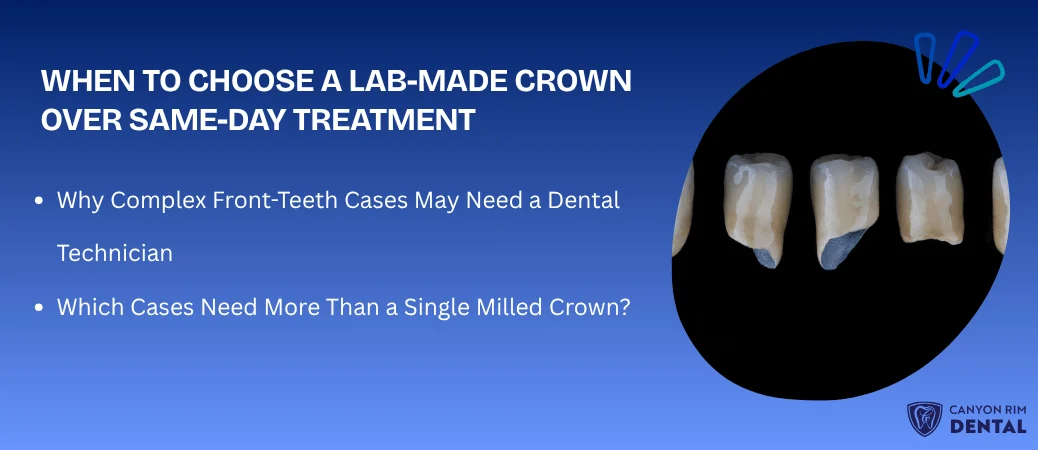
Front teeth show subtle color changes, translucent edges, and small light-catching details that are hard to reproduce from a single block of ceramic.
A dental technician can hand-layer porcelain and adjust shade matching and color matching in stages, building depth that mimics the tooth right next to it.
For a visible front tooth, that extra customization often makes the difference between a crown that blends in and one that stands out.
Which Cases Need More Than a Single Milled Crown?
Multi-unit bridges, where several connected crowns span a gap left by missing teeth, require lab fabrication because of how the units must align and share bite force.
Complicated bite issues, gum disease affecting the surrounding tissue, or a tooth with limited remaining structure also benefit from a lab’s slower, more deliberate process.
Gold crowns and PFM crowns, both lab-only materials, remain common choices for molars under heavy chewing load or for patients who grind.
How Much Does Each Crown Option Cost?
A CEREC crown and a traditional lab crown usually cost about the same, generally falling in the $800 to $1,500 range per tooth, since the price reflects the ceramic material and clinical work rather than the number of visits.
The national average for a dental crown spans roughly $500 to $2,000.
What Affects CEREC and Traditional Crown Cost?
Material choice drives most of the price difference, not whether the crown came from a milling unit or a lab.
A zirconia crown, a gold crown, and a layered porcelain crown all carry different price points regardless of fabrication method.
The location of the tooth, the complexity of your bite, and your geographic region also shift the final number.
A crown on a molar that needs extra strength for chewing may cost more than a simpler restoration on a front tooth.
Does Insurance Cover Same-Day and Lab Crowns Differently?
Insurance plans typically cover a crown based on material and clinical need, not on which method produced it.
Most dental plans treat a crown as a major procedure and cover a portion of the cost after your deductible, often close to half.
Ask your dental office for a written estimate before treatment starts, since coverage details vary by plan and by the specific material recommended for your tooth.
If cost is a concern either way, it helps to look into financing options before your appointment.
Choose the Crown That Fits Your Tooth and Priorities
A same-day crown fits well when you need a straightforward restoration on a back tooth and want to avoid a second appointment and a temporary crown.
Traditional lab crowns still make sense for front teeth, complex bites, and cases involving more than one tooth, where hand-layered shading and specialized materials matter most.
Your daily habits shape a crown’s lifespan more than the machine or the lab that made it.
Consistent oral hygiene and, if you grind your teeth, a plan to manage bruxism will do more for your crown’s longevity than choosing one fabrication method over the other.
Talk with your dentist about your specific tooth, your bite, and how much natural structure remains before deciding.
That conversation, more than any general rule about speed or tradition, points you toward the better choice for your smile.
Frequently Asked Questions
Are CEREC crowns as good as lab crowns?
For many patients, yes. CEREC crowns fit within the same clinically accepted range as lab crowns and commonly last 10 to 15 years, similar to well-made traditional crowns.
The better fit depends more on your dentist’s skill and tooth preparation than on the fabrication method itself.
What are the disadvantages of CEREC crowns?
CEREC crowns are limited to ceramic materials milled from a single block, so options like gold or hand-layered porcelain aren’t available.
Front teeth needing subtle shade blending sometimes look less natural with a milled crown compared with a lab-made one.
Are same-day crowns as good as traditional crowns?
Same-day crowns perform comparably to traditional crowns for most back-tooth restorations, with similar survival rates over five years.
Traditional crowns still hold an edge for front-tooth aesthetics and cases needing specialized materials like gold or PFM.
How much does a CEREC crown cost compared with a traditional crown?
CEREC crowns and traditional crowns usually cost about the same, generally between $800 and $1,500 per tooth.
The price reflects the material used and the clinical work involved rather than whether the crown was milled in-office or made at a lab.
Do same-day CEREC crowns last as long as lab-made crowns?
Yes, in most cases. Both types commonly last 10 to 15 years or longer when the tooth is prepared well and the crown is cared for with regular brushing, flossing, and dental checkups.
Grinding and bite force affect longevity more than the fabrication method does.
Is a lab-made crown better for a front tooth?
A lab-made crown often looks more natural on a front tooth because a technician can hand-layer porcelain to match translucency and shade.
This extra customization is harder to achieve with a single milled ceramic block, making lab crowns the common choice for visible front teeth.