


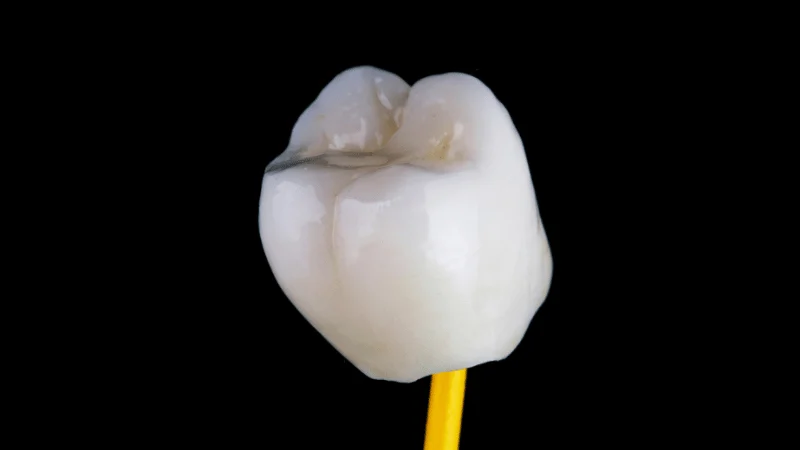
Your dental crown should protect your tooth, not cause stress. When it cracks, chips, or falls off, you need clear answers fast. You may wonder if a quick repair will fix the problem or if you need to consider a replacement option.
You can repair a failed dental crown if the damage is minor, but you should replace it if the crack is large, the crown keeps coming loose, or decay has formed under it.
Small chips or loose crowns often respond well to simple fixes. Major breaks or repeated problems usually mean the crown can no longer protect your tooth.
If you act quickly, you can prevent more damage and avoid pain. Understanding why crowns fail and knowing your options helps you protect your smile and make a smart choice.
Key Takeaways
- Minor chips or loose crowns often need simple repair.
- Large cracks, repeat issues, or decay usually require replacement.
- Quick action helps protect your tooth and prevent bigger problems.
Table of Content
- Recognizing and Responding to Broken Dental Crowns
- Why Dental Crowns Fail
- Repair Options for Damaged Crowns
- When Replacement is the Best Solution
- Preventing Crown Failure and Future Complications
- Frequently Asked Questions
Recognizing and Responding to Broken Dental Crowns
A broken dental crown can cause pain, sensitivity, or changes in how your teeth fit together. Quick action helps protect the tooth under the crown and lowers the risk of infection or further damage.
Common Symptoms of Damage
You often feel a rough or sharp edge with your tongue if you have a chipped dental crown. Small cracks may not hurt at first, but they can trap food and bacteria.
Pain when you bite down is another warning sign. This can mean the damaged crown no longer fits tight against your tooth. You may also notice sensitivity to hot, cold, or sweet foods.
Look for these signs:
- Sudden tooth pain when chewing
- A crown that feels loose or moves
- Swelling or soreness in the gums around the tooth
- A crown that has fully fallen out
Many cases of a broken dental crown happen because of decay under the crown, teeth grinding, or injury. If the tooth underneath weakens, the crown can crack or detach.
Immediate Steps to Take at Home
Treat a damaged crown as urgent, even if the pain is mild. You want to protect the exposed tooth right away.
If the crown falls off, rinse it gently with water. Store it in a clean container. Do not try to clean it with harsh products.
You can use over-the-counter dental cement from a pharmacy to place the crown back on the tooth for a short time. This is only a temporary fix. Avoid chewing on that side of your mouth.
To ease discomfort:
- Take ibuprofen if you can use it safely
- Rinse with warm salt water
- Use a cold compress on your cheek for swelling
If the crown is cracked but still attached, avoid hard or sticky foods. Even a small chipped dental crown can break more if you put pressure on it.
When to Seek Emergency Dental Care
Call your dentist right away if you have severe pain, swelling, or signs of infection. These signs include fever, pus, or a bad taste that does not go away.
You also need prompt care if the tooth under the crown feels very sensitive or if you see dark areas that may signal decay. In some cases, a loose crown can be re-cemented if the tooth is still healthy. Other times, you may need repair or full replacement.
Do not wait more than a few days without a crown. The exposed tooth can crack, shift, or develop infection. Fast treatment helps save your tooth and reduces the need for more complex care.
Why Dental Crowns Fail
A failed crown usually links back to decay, pressure from teeth grinding, daily care habits, or problems during placement. When you know what causes failure, you can act early and protect your tooth.
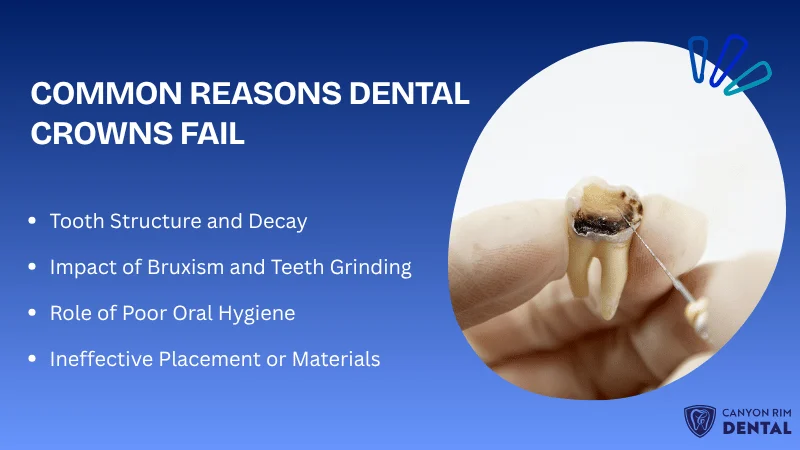
Tooth Structure and Decay
Your natural tooth supports the crown. If that tooth weakens, the crown cannot do its job.
Decay often forms at the edge where the crown meets your tooth. This small gap is called the margin. Bacteria can slip in and cause hidden cavities under the crown.
You may not feel pain at first. But over time, the tooth structure breaks down and the crown can loosen or fall off.
Common warning signs include:
- Sensitivity to cold or sweets
- Bad taste near the crowned tooth
- Swelling around the gums
- A loose or shifting crown
Microleakage, which means tiny leaks between the crown and tooth, also plays a role. If decay spreads too far, you may need a root canal or even an extraction.
Impact of Bruxism and Teeth Grinding
If you grind or clench your teeth, you place strong force on your crown. Bruxism often happens at night, so you may not know you do it.
Grinding creates pressure that is much stronger than normal chewing. Over time, this force can:
- Crack porcelain
- Chip ceramic
- Loosen cement
- Fracture the tooth under the crown
You might notice jaw pain, headaches, or worn edges on your teeth. These signs point to bruxism.
Even a well-made crown can fail under constant grinding. Harder materials like zirconia resist fracture better than some layered porcelain crowns, but no material is indestructible.
A custom night guard and proper bruxism treatment helps protect both your crown and your natural tooth structure from damage.
Role of Poor Oral Hygiene
Crowns do not get cavities, but the tooth under them can. If you skip brushing and flossing, plaque builds up around the gumline.
Poor oral hygiene allows bacteria to settle along the crown margin. This leads to gum inflammation, bleeding, and decay beneath the crown.
You raise your risk of a failed crown when you:
- Brush less than twice a day
- Avoid flossing around the crown
- Miss regular dental cleanings
Some dental practices note that poor oral hygiene can increase the risk of crown failure. When plaque stays in place, it hardens into tartar, which makes cleaning even harder.
Healthy gums support the crown. Inflamed or receding gums expose the edge of the crown and make decay more likely.
Ineffective Placement or Materials
The way your dentist prepares and places the crown matters just as much as how you care for it.
If the tooth is shaped poorly, the crown may not fit tightly. A bad fit can cause rocking, open margins, or early cement failure. In some cases, crowns fail within just a few years instead of lasting over a decade.
Material choice also affects durability. Some ceramics look natural but chip more easily under heavy bite force. Lower quality materials may wear down faster or stain over time.
A strong, well-fitted crown should last many years. But if placement technique, bonding, or material quality falls short, you may face repair or replacement sooner than expected.
Repair Options for Damaged Crowns
A damaged crown does not always mean you need a full replacement. Dentists often fix small flaws, reattach loose crowns, or use short-term solutions to protect your tooth until you get proper care.
Minor Chips and Surface Cracks
If you have a chipped dental crown or a small surface crack, your dentist may repair it instead of replacing it. Small chips in porcelain or ceramic often respond well to bonding with tooth-colored composite resin.
Your dentist smooths rough edges and applies resin to rebuild the damaged area. This type of crown repair works best when the crack does not reach the inner structure of the crown or the tooth underneath.
You should act quickly. Even a minor chip can trap plaque and lead to decay under the crown.
If the crack is deep or the crown feels weak when you bite, your dentist may suggest a new crown. Severely cracked crowns often require replacement to protect the tooth.
Rebonding a Loose Crown
If your crown feels loose but looks intact, your dentist may clean and reattach it. This process is called re-cementing or rebonding.
Your dentist removes the crown, checks the tooth for decay, and cleans off old cement. If the tooth is healthy and the crown still fits well, they secure it with fresh dental cement.
Many loose crowns fail because decay forms under the crown or the cement seal weakens over time.
If the tooth underneath has damage, you may need additional treatment before the crown goes back on.
Temporary Fixes Until Professional Help
You should see a dentist as soon as possible if your crown falls off or breaks. Still, you can protect your tooth at home for a short time.
If the crown comes off, clean it gently and store it in a safe container. You can use over-the-counter dental cement from a pharmacy to hold it in place. Follow the instructions carefully and avoid swallowing the crown.
You can also wear a temporary crown if your dentist provides one while waiting for a permanent replacement.
To reduce pain or swelling:
- Rinse with warm salt water
- Take over-the-counter pain relievers as directed
- Avoid chewing on the affected side
These steps help protect your tooth, but they do not replace professional care.
When Replacement is the Best Solution
Sometimes a repair will not protect your tooth for long. In these cases, replacing a failed crown helps prevent pain, infection, and further damage.
Severe Fractures and Decay
A broken dental crown with a deep crack or large missing piece often needs full crown replacement. Small chips can sometimes be repaired, but severe fractures weaken the structure and expose the tooth underneath.
Decay under the crown is another clear reason to replace it. If bacteria reach the tooth, you may feel pain, swelling, or sensitivity to hot and cold.
Your dentist must remove the failed crown, clean out the decay, and check if the tooth is still strong enough to support a new one.
In many cases, treatment follows this basic path:
- Remove the damaged crown
- Treat decay or infection
- Rebuild the tooth if needed
- Place a temporary crown
- Fit a new custom crown
If the tooth cannot support another crown, your dentist may discuss other options, including extraction and replacement.
Lost or Non-Reparable Crowns
If your crown falls off but remains intact, your dentist may re-cement it. However, if it cracks, warps, or no longer fits, replacement is often the safer choice.
A crown that repeatedly comes loose may signal a deeper issue. The tooth underneath may have changed shape due to decay or wear. In these cases, repair will not solve the root problem.
Dentists weigh repair versus replacement based on long-term success. Research on repair versus replacement of defective restorations shows that both options have value, but replacement becomes necessary when the structure cannot support a stable fix.
If you have a lost or damaged crown, avoid chewing on that side. The exposed tooth can crack or shift, which makes treatment more complex.
Implant-Supported Crown Options
If your tooth cannot be saved, you may need it removed. After healing, you can restore the area with an implant-supported crown.
An implant-supported crown attaches to a titanium post placed in your jawbone. This option does not rely on neighboring teeth for support. It also helps maintain bone in the area.
You may receive a temporary crown while the implant heals. Once the implant fuses with the bone, your dentist places the final crown.
This type of crown replacement works well when:
- The original tooth has severe decay or fracture
- A failed crown cannot attach to a stable tooth
- You want a long-term solution that feels natural
An implant-supported crown often restores both function and appearance, especially after major tooth damage.
Preventing Crown Failure and Future Complications
You can lower the risk of a failed dental crown by caring for your tooth structure every day and fixing small problems early. Good habits, regular dental exams, and protection against grinding all help your crown last longer.
Maintaining Oral Hygiene
Poor oral hygiene is a common cause of crown failure. Plaque can build up at the edge of your crown and lead to decay under the restoration.
Brush twice a day with a soft toothbrush and fluoride toothpaste. Focus on the gumline where the crown meets your natural tooth. This area traps food and bacteria.
Floss once a day. Slide the floss gently along the side of the crown instead of snapping it down. This helps protect your gums and keeps the margin clean.
If plaque stays in place, it can weaken the tooth structure under the crown. Over time, this may lead to infection or the need for a replacement. Replacing a damaged crown protects the tooth and lowers the risk of deeper problems like decay or abscess.
You can also use an antibacterial mouth rinse if your dentist recommends it. Clean teeth and healthy gums give your crown a stable base.
Addressing Bruxism and Grinding
Bruxism, or teeth grinding, puts strong pressure on your crown. Many people grind at night without knowing it.
Grinding can loosen a crown, crack the porcelain, or stress the tooth structure underneath. You may notice jaw pain, headaches, or worn teeth.
If you grind your teeth, ask your dentist about a custom nightguard. Dentists often recommend this when placing a new crown to protect it from damage.
A nightguard creates a barrier between your upper and lower teeth. It spreads out the force and lowers the risk of fracture.
You should also manage stress, since stress can increase teeth grinding. Small steps like stretching or quiet time before bed can help reduce clenching.
Importance of Regular Dental Check-Ups
Dental check-ups help catch problems early. Your dentist checks the crown’s fit, the condition of your gums, and signs of decay.
Even strong crowns do not last forever. Most last many years, but they can fail over time.
During a visit, your dentist may take X-rays. These images show hidden decay under the crown or changes in the tooth structure.
Regular cleanings also remove hardened plaque that brushing cannot. Skipping dental check-ups allows small issues to grow into bigger and more costly repairs.
Plan visits at least twice a year, or more often if your dentist suggests it.
Protecting Your Crowns from Everyday Risks
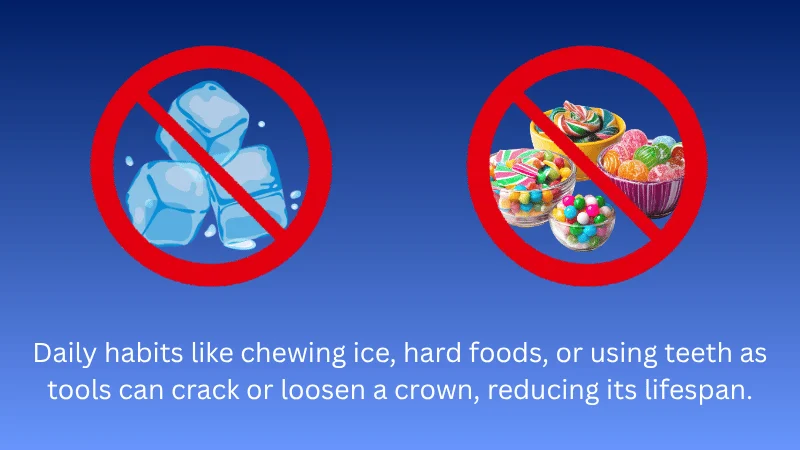
Daily habits affect how long your crown lasts. Biting hard foods like ice, hard candy, or popcorn kernels can crack porcelain.
Avoid using your teeth to open packages. This simple habit prevents chips and loosened crowns.
If your crown feels loose or you notice pain, act quickly. Getting help early may allow a repair instead of a full replacement.
Wear a mouthguard during sports. A direct hit to your mouth can damage both the crown and the natural tooth under it.
Small protective steps each day help you avoid future complications and protect your investment in your smile.
Frequently Asked Questions
A failed crown often causes clear symptoms like pain, movement, or visible damage. Quick action and a dental exam help you decide between a simple repair and a full replacement.
What are the most common signs that a dental crown has failed?
You may feel pain when you bite down. Hot or cold foods might also cause sharp sensitivity.
You might see a crack, chip, or a piece missing from the crown. Some crowns feel loose or wobble when you touch them with your tongue.
Discomfort while chewing is another common sign.
Can a loose or fallen-off crown be re-cemented, or does it usually need a new one?
Dentists can often re-cement a crown if it is still in good shape and fits well. They clean the tooth and the crown before placing it back.
You usually need a new crown if the old one is cracked, worn down, or does not fit tightly anymore. Damage to the tooth under the crown can also require a replacement.
Insurance rules may affect timing, since many plans limit coverage for repeat crowns within a set period. Some policies only cover one crown every five years.
How do dentists decide whether a damaged crown can be repaired instead of replaced?
Your dentist checks the size of the crack or chip. Small surface chips may be fixed with bonding material.
Large fractures often weaken the crown too much for repair. If a big portion is missing, replacement is usually safer.
The dentist also checks the tooth underneath. If decay or structural damage exists, a new crown may provide better support.
What should I do right away if my crown cracks, chips, or comes off?
Call your dentist as soon as possible and book an appointment. Fast care lowers the risk of infection or further damage.
If the crown falls off, keep it in a clean container and bring it with you. Avoid chewing on that side of your mouth.
Do not try to fix the crown at home with glue or other products. Home repairs can harm the tooth and make proper treatment harder.
How long does it typically take to repair or replace a crown, and how many visits are needed?
A simple repair or re-cement often takes one visit and less than an hour. You can usually return to normal activities the same day.
Replacing a crown often takes two visits. During the first visit, your dentist prepares the tooth and places a temporary crown.
You return once the lab makes the permanent crown. Some offices offer same-day crowns, which may complete the process in one appointment.
Will repairing or replacing a crown hurt, and what pain relief options are available?
Your dentist numbs the area with local anesthesia before working on the tooth. You should feel pressure but not sharp pain.
After the visit, mild soreness or sensitivity may last a few days. Over-the-counter pain relievers often manage this discomfort.
If you feel severe pain or swelling, contact your dentist right away. That may signal a deeper problem that needs attention.