


If you are thinking about dental implants, you need to know how strong your jawbone is. Your bone does more than hold the implant in place. It helps the implant bond and stay stable over time.
Bone density directly affects how well your implant fuses with your jaw and how long it lasts. When your bone is dense and healthy, it supports better stability. When it is thin or weak, the risk of early failure can rise.
Research shows that lower bone density, especially in older adults, links to higher early implant failure rates and lower stability during healing, as seen in this study on the impact of age-related bone density variations on dental implant success.
The good news is that dentists can measure your bone and plan the right approach. With the right steps, you can improve your chances of a strong, lasting result.
Key Takeaways
- Strong jawbone supports better implant stability and healing.
- Low bone density can increase the risk of early implant failure.
- Careful planning and proper treatment can improve long-term success.
The Critical Relationship Between Bone Density and Dental Implant Success
Your jawbone must be strong enough to hold a dental implant in place from day one. Bone density affects how stable the implant feels at placement and how well it bonds with your bone over time.
Why Bone Density Matters for Implants
Bone density refers to how solid and compact your jawbone is. When you have higher bone density, your bone can grip the implant more firmly right after surgery.
A dense jawbone gives the implant a strong base. This support helps reduce micromovements that can interfere with healing.
Research shows that bone density plays a critical role in implant dentistry because it affects how well the implant fuses with bone.
Low bone density, which is more common in older adults or people with osteoporosis, may lower implant success if not managed.
A study on age-related bone density variations and dental implant stability found that changes in bone quality can influence long-term outcomes.
Your dentist may use 3D scans to measure bone density before treatment. This step helps guide implant size, placement, and whether you need a bone graft.
How Bone Density Influences Osseointegration
Osseointegration is the process where your jawbone grows around the implant surface. This direct bond turns the implant into a stable part of your bone.
Bone density affects how quickly and how well this bond forms. Denser bone often allows for stronger early contact between bone and implant threads.
Studies on bone mineral density and implant stability show that bone quality at the implant site influences healing time and load-bearing capacity. When bone is soft or porous, healing may take longer.
If your bone density is low, your dentist may adjust the healing period before placing pressure on the implant. In some cases, they may recommend bone grafting to improve bone health and create better conditions for osseointegration.
Healthy habits also matter. Good nutrition, avoiding smoking, and managing medical conditions support stronger bone and better integration.
Implant Stability and Jawbone Quality
Implant stability has two stages:
- Primary stability – the mechanical grip at placement
- Secondary stability – the biological stability after osseointegration
Primary stability depends heavily on jawbone quality. A firm, dense jawbone allows the implant threads to lock into place.
According to research on bone quality as a success factor in dental implants, survival rates relate closely to the bone of the upper and lower jaws. The upper jaw often has softer bone, which can affect stability.
If your jawbone lacks density, your dentist may use wider or longer implants to increase surface contact. They may also use special drilling techniques to preserve bone.
By understanding your bone density before treatment, you improve your chances of strong implant stability and long-term implant success.
Understanding Bone Density: Key Factors and Measurement
Your jawbone must be strong enough to hold a dental implant firmly in place. Dentists measure bone density and structure carefully to decide if your bone can support long-term implant success.
What Is Bone Density?
Bone density describes how strong and compact your bone tissue is. In dental care, it refers to how much solid bone exists in a specific part of your jawbone.
When you lose a tooth, the jawbone in that area no longer receives pressure from chewing. Your body then begins to shrink that bone, a process called resorption. Over time, the bone can lose both height and thickness.
Low bone density means the bone feels softer and offers less support. A dental implant needs firm, healthy bone around it to stay stable while it heals.
This healing process, called osseointegration, allows the implant to fuse with your jawbone.
Several factors affect your bone density:
- Tooth loss over time
- Gum disease
- Injury to the jaw
- Aging
- Certain medical conditions
Your dentist focuses on the exact area where the implant will go, not just your overall bone health.
How Jawbone Density Is Assessed
Your dentist does more than look at your gums. They examine the shape, height, width, and density of your jawbone before placing an implant.
A clinical exam checks your oral health and looks for signs of bone loss. However, your dentist cannot measure bone density accurately without imaging. That is why advanced scans are often needed.
Research continues to study how bone density changes with age and how this affects implant stability. One study on the impact of age-related bone density variations on dental implants explains how bone quality plays a direct role in implant success.
Your dentist may also classify bone quality based on how dense or porous it appears. Dense bone usually provides better initial stability. Softer bone may still work, but it may require special planning or added support.
Role of CBCT Scans in Diagnosis
A CBCT scan (cone beam computed tomography) gives a detailed 3D image of your jawbone. Unlike a regular dental X-ray, CBCT scans show depth, thickness, and internal bone structure.
This imaging allows your dentist to:
- Measure bone height and width
- Evaluate bone density in the exact implant site
- Identify nearby nerves or sinuses
- Plan precise implant placement
Studies on preoperative assessment of bone density using CBCT highlight how important accurate measurement is before implant surgery.
With cone beam computed tomography, your dentist can see whether your jawbone can support an implant right away or if you need a bone graft first.
This careful planning improves stability and reduces the risk of implant failure.
Talk to a dental professional about improving bone density for implant success.
Challenges of Low Bone Density: Risks and Solutions
Low bone density can limit your options for dental implants, but you still have solutions. When you understand the causes, risks, and treatment steps, you can take clear action to protect your results.
Common Causes of Bone Loss
Your jawbone stays strong when your teeth stimulate it during chewing. When you have missing teeth, that stimulation stops and jawbone loss starts. The body then begins bone resorption, which means it slowly breaks down bone that it no longer needs.
Periodontal disease is another major cause. Infection damages the gums and the bone that supports your teeth. Over time, this leads to bone loss around affected areas.
You may also face age-related bone loss. As you get older, your bone density can decrease, especially if you have osteoporosis. Certain medical conditions, smoking, and long gaps after tooth loss can make bone loss worse.
The longer you wait to replace a missing tooth, the more bone you may lose.
Consequences of Low Bone Density on Implant Outcomes
Dental implants rely on a firm bond between the implant post and your jawbone. This process is called osseointegration. Without enough healthy bone, the implant may not stay stable.
If your bone is too thin or soft, you face a higher risk of implant failure. The implant can loosen, shift, or fail to integrate fully with the bone.
An implant needs enough height and width of bone to anchor securely. When bone resorption reduces that support, chewing forces place extra stress on the implant.
Low bone density can also limit where your dentist can place the implant. In some cases, you may need added procedures before moving forward.
Diagnosing and Managing Bone Resorption
Your dentist must measure your bone before placing an implant. Many practices use 3D imaging to check bone height, width, and density. This helps your dentist spot hidden bone resorption and plan safely.
If you have low bone density, you still have options. Common treatments include:
- Bone grafting to rebuild lost bone
- Sinus lift procedures for the upper back jaw
- Careful treatment of periodontal disease before surgery
Some patients with osteoporosis may also need medical guidance to improve bone health.
Modern techniques allow many patients with low bone density to qualify for implants after proper preparation. Early evaluation gives you the best chance to avoid long-term bone loss and reduce the risk of implant failure.
Enhancing Implant Success in Patients With Low Bone Density
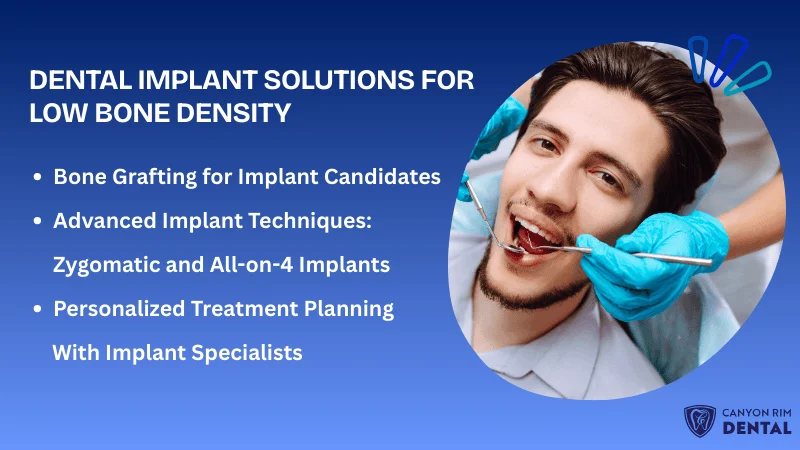
Low bone density does not rule out dental implants. You can improve implant stability with bone grafting, advanced implant techniques, and careful planning with an implant specialist.
Bone Grafting for Implant Candidates
If your jawbone lacks volume or density, your provider may recommend bone grafting before implant placement. A bone graft adds material to weak areas so your implant has a stable base.
Dentists use different graft materials, including:
- Your own bone (autograft)
- Donor bone (allograft)
- Synthetic bone substitutes
After placement, the graft heals and bonds with your natural bone. This process can take several months, but it strengthens the site and improves long-term implant support.
Research shows that implant survival after five years does not differ much between patients with low and normal bone density when proper steps are taken, according to a systematic review on dental implants in low bone density patients.
Careful grafting and surgical technique play a key role in that success.
Advanced Implant Techniques: Zygomatic and All-on-4 Implants
When bone loss is severe, standard implant placement may not work well. In these cases, your implant specialist may suggest advanced options used in modern implantology.
Zygomatic implants anchor into the cheekbone instead of the upper jaw. The cheekbone often has stronger density, even when the upper jaw does not. This approach avoids large bone graft procedures in some patients.
The All-on-4 technique uses four implants placed at specific angles to support a full arch of teeth. Angled placement helps use the densest areas of available bone. It can reduce the need for bone grafting and may allow faster treatment.
These methods require special training and careful planning. Not every patient is a candidate, so a detailed exam is essential.
Personalized Treatment Planning With Implant Specialists
Low bone density demands precise planning. An experienced implant specialist will review your medical history, medications, and bone health before surgery.
Your provider may use:
- 3D imaging to measure bone volume
- Bone density assessment tools
- Customized surgical guides for accurate implant placement
Special surgical techniques, such as adjusting the drilling method, can improve primary stability in softer bone.
Some studies suggest adapted techniques may help achieve similar stability and bone response compared to normal bone when done carefully, as discussed in this review on implant techniques in low bone density regions.
With a clear plan and the right approach, you can improve implant stability and protect your long-term results.
Improving and Maintaining Jawbone Health Before and After Implants
Strong bone health gives your implant a stable base, and daily habits play a direct role in that stability.
You can support healing before surgery and protect dental implant success long after placement with steady care and close follow-up.
Lifestyle Factors That Support Bone Health
Your jawbone needs regular stimulation and proper nutrition to stay dense. After tooth loss, bone can shrink without that pressure.
You can strengthen your bone with simple steps:
- Eat calcium-rich foods like milk, yogurt, leafy greens, and almonds
- Get enough vitamin D from safe sun exposure or supplements
- Do weight-bearing exercise such as walking or light strength training
- Avoid smoking, which slows healing and weakens bone
If you have low bone density, your dentist may suggest grafting. This procedure adds bone material to build a stronger base.
Monitoring and Follow-Up for Long-Term Success

You protect dental implant success by keeping regular dental visits. Your dentist checks bone levels, gum health, and implant stability at each exam.
Expect periodic X-rays to track bone changes around the implant. Early bone loss often has no clear symptoms, so imaging helps catch small problems before they grow.
At home, you play a key role. Brush twice daily with a soft brush and clean around the implant carefully. Floss or use interdental brushes to remove plaque near the gumline.
Report signs like swelling, bleeding gums, or a loose feeling right away. Quick treatment can prevent further bone damage and protect your investment in strong, lasting bone health.
Frequently Asked Questions
Bone density affects how well your implant bonds to your jaw and how long it stays stable. Your age, medical history, medications, and imaging results all play a role in planning safe treatment.
What level of bone density is considered adequate for dental implant placement?
Dentists often measure bone density using Hounsfield Units (HU) on a CT or CBCT scan. Jawbone that falls roughly between 150 and 850 HU can support implants, depending on location and bone width.
Denser cortical bone offers stronger initial stability. Softer bone may still work, but your dentist might adjust the implant design or use bone grafting to improve support.
How does osteoporosis influence the likelihood of dental implant success?
Osteoporosis lowers bone mass and can reduce the strength of your jaw. This may slow healing and reduce how firmly the implant bonds to bone.
Many people with controlled osteoporosis still receive implants successfully. Your dentist will review your bone scans and medical history before moving forward.
Can medications for bone strength, like bisphosphonates, impact the outcome of dental implants?
Bisphosphonates help slow bone loss, but they can affect how your bone heals after surgery. In rare cases, they link to delayed healing in the jaw.
You should tell your dentist if you take oral or IV bisphosphonates. Your care team may coordinate with your physician before placing implants.
What are some signs that indicate poor bone quality prior to dental implant surgery?
You may not feel low bone density, but certain signs raise concern. Long-term tooth loss, loose dentures, and advanced gum disease often point to bone loss.
Your dentist may also notice thin bone on X-rays. Severe periodontal disease can erode the bone that supports teeth and make implant placement more complex.
Are there any specific bone density tests recommended before getting dental implants?
Dentists commonly use CBCT scans to check bone height, width, and density. These 3D images help them see nerve positions and sinus spaces.
The scan allows your dentist to measure bone quality before surgery.
In some cases, your doctor may also review a recent medical bone density test if you have osteoporosis.
How does bone quality affect the longevity of dental implants?
Strong bone creates a tighter bond between your jaw and the implant. This process, called osseointegration, supports long-term stability.
Lower-quality bone may increase the risk of early movement or delayed healing. Over time, poor support can raise the chance of implant failure.