
An infection around a dental implant can be concerning, especially after the time and money you’ve invested in your smile.
Fortunately, infected dental implant treatment may help preserve the implant when the infection is identified early.
The right approach depends on whether inflammation affects only the gums, whether bone loss has occurred, and whether the implant remains stable.
Dental infections are common. If you have dental implants and notice bleeding, swelling, or a bad taste, you are not alone, and there is a clear way to sort out what comes next.
Key Takeaways
- Gum-only inflammation around an implant is often reversible with cleaning and better home care.
- A stable implant with limited bone loss has the best chance of being kept.
- Removal followed by healing can still lead to a new implant later.
What Determines Whether an Implant Can Be Saved?
Three things decide the outlook: how deep the infection has gone, whether the implant is still solid in the bone, and whether the cause can be fixed.
A gum-only problem caught early is far easier to treat than one that has already eaten into bone.
Peri-Implant Mucositis vs. Peri-Implantitis: Why the Difference Matters
Peri-implant disease comes in two stages. The first, peri-implant mucositis, is inflammation of the gum around the implant with no bone loss.
It works much like gingivitis around a natural tooth, and it is a reversible inflammation marked by redness, swelling, and bleeding when the gum is gently probed.
The second stage, peri-implantitis, adds bone loss. Once bone starts to break down, pockets deepen and the implant loses some of its support.
Treatment becomes more involved, and the goal shifts to stopping the damage and, where possible, repairing it.
If you have had gum problems with natural teeth, the pattern will feel familiar. The links between gum disease and dental implants are close, since the same kinds of bacteria drive both.
How Bone Support, Implant Stability, and Treatable Causes Affect the Outlook
An implant stays put because bone grows tightly against its surface. When that bond is still mostly intact, your dentist has something to work with. When the implant itself moves, that bond has failed.
The shape of the bone loss counts too. A crater with bone walls around it tends to heal better after treatment than bone loss that rings the whole implant evenly.
Your starting bone density for dental implants also affects how much reserve you have.
Then there is the cause. Common culprits your dentist will look for include:
- Leftover cement trapped under the gum after the crown was placed
- A crown shape that blocks brushes and floss
- A loose screw or abutment that lets bacteria collect
- Smoking or poorly controlled diabetes
- A bite that puts heavy force on the implant
If the cause can be corrected, the odds of keeping the implant improve.
Why Earlier Treatment Improves the Chance of Keeping the Implant
Peri-implant infections are the major cause of late implant failures, and that damage builds over time.
Untreated peri-implant inflammation can progress and contribute to further bone loss, although the rate of progression varies between patients.
Caught at the mucositis stage, treatment is often a cleaning plus changes to your home routine. A failing implant may be salvaged if it is diagnosed early, while one that has fully failed is usually removed.
How Does a Dentist Assess the Infection?
Your dentist combines what you feel with what they measure: a gum exam, a check for movement, and a dental x-ray to see the bone.
Together these show whether you are dealing with gum inflammation, bone loss, or a problem with the parts on top.
Which Symptoms Need Prompt Dental Care?
Call your dentist within a few days if you notice any of these around an implant:
- Bleeding when you brush or floss that keeps coming back
- Red, puffy, or tender gums
- Pus, a pimple-like bump on the gum, or a bad taste that returns
- Gums pulling back so metal shows
- Pain when chewing or a bite that feels different
- Any feeling that the implant or crown shifts
Keep in mind that a dental implant infection can be quiet. Bone loss can progress with little or no pain, so a lack of pain is no reason to wait.
When Do Swelling, Fever, or Trouble Swallowing Require Urgent Help?
Some signs point to an infection that is spreading beyond the implant. Seek same-day care if you have facial swelling that keeps growing, fever or chills, or redness spreading across your cheek or jaw.
Trouble swallowing or breathing, or swelling under the tongue or down the neck, is an emergency. Go to an emergency room or call 911. For fast-moving problems that are not life-threatening, dental emergencies can get you seen quickly.
What Do Gum Measurements and a Dental X-Ray Reveal?
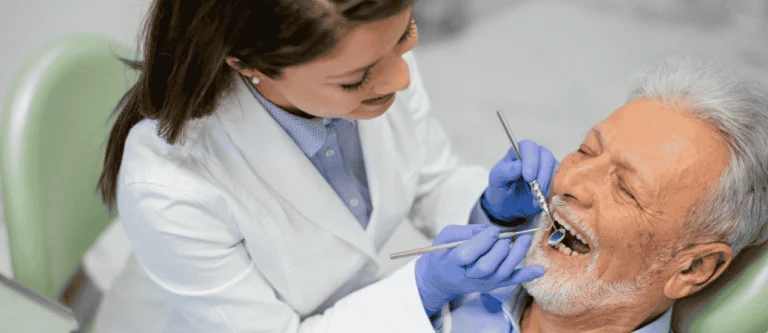
Your dentist slides a thin probe gently between the gum and implant to measure pocket depth. Deeper pockets, or pockets that grow from visit to visit, suggest the disease is moving down toward bone.
Bleeding or pus on probing shows active inflammation.
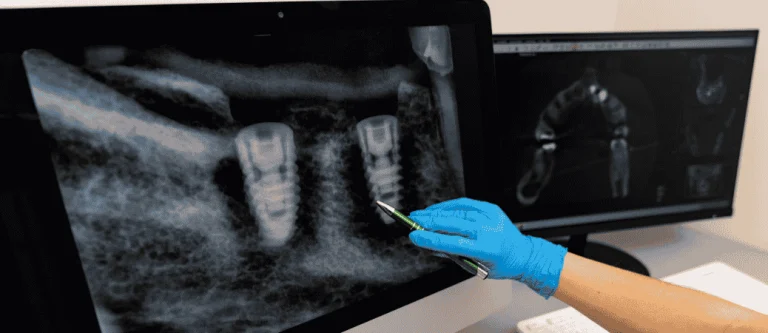
A dental x-ray shows the bone level. Comparing it with images taken when your crown was placed tells your dentist how much bone has changed.
Comparing current x-rays with earlier images, when available, helps your dentist assess changes in bone support around the implant.
If bone loss shows up or gum inflammation does not settle after a cleaning, a periodontist (a gum and bone specialist) is often brought in.
Is the Implant Loose, or Is It the Crown or Screw?
This question changes everything. A crown that wiggles is often a loose screw or a crown that has come unglued. Those are mechanical fixes, and the implant underneath may be perfectly healthy.
When the implant post itself moves in the bone, the bond has failed, and that implant usually cannot be kept. Your dentist can tell which part is moving by testing the crown and, if needed, removing it to check the post. More detail on a loose dental implant can help you describe what you are feeling.
Which Treatments Can Help Preserve the Implant?
Treatment starts with the gentlest option that matches what was found and steps up only if needed. Gum-only inflammation is usually handled with cleaning, while peri-implantitis with bone loss often needs surgery to reach and clean the implant surface.
Professional Cleaning and Mechanical Debridement
Debridement means carefully removing plaque, hardened tartar, and inflamed tissue from around the implant.
Your dentist uses instruments made to clean implants without scratching them, along with ultrasonic tools and air-polishing powders that reach tight spots.
This visit is also when trapped cement gets cleared and a hard-to-clean crown may be reshaped. You will get a home routine built around your implant.
Afterward, your dentist rechecks the area to see if bleeding and pocket depths have improved.
When Is Antimicrobial Therapy Appropriate?
Antimicrobial therapy includes rinses like chlorhexidine, antibiotic gels placed into the pocket, or a course of pills. These work best as a partner to cleaning.
The reason is biofilm, the sticky layer bacteria build on the implant. Bacteria inside it can resist antimicrobials up to 1000 times more than free-floating bacteria.
Pills alone leave that layer in place, which is why symptoms often return after the bottle runs out.
Flap Surgery and Implant Surface Decontamination
When pockets are deep or cleaning from above the gum is not enough, flap surgery opens the gum so your dentist can see the implant and bone directly.
Inflamed tissue is removed and the exposed implant surface is cleaned and disinfected.
In some cases the bone edges are smoothed and the gum is repositioned lower to make the area easier to clean. Expect a few days of soreness and a soft diet for a short time.
This kind of care often overlaps with periodontal disease treatment for natural teeth.
When Might Implantoplasty or Bone Grafting Help?
Implantoplasty smooths the rough, exposed threads of the implant so plaque has fewer places to hide. It suits areas where the threads sit above the bone and appearance is less of a concern.
Bone grafting fills in a bone defect around the implant, often with a membrane over it. It works best when the defect has bone walls around it to hold the graft. Regrowth results vary, so your dentist can explain the goal without promising the bone will come back fully. The ideas behind bone grafts and sinus lifts apply here too.
When Is Removal the Safer Choice?
Removal makes sense when keeping the implant would cause more harm than it prevents. Keeping a hopeless implant lets infection keep wearing away bone, which can make the next implant harder to place.

Loss of Integration, Fracture, or Infection That Persists Despite Treatment
The clearest reasons for removal are:
- Implant movement: the post shifts in the bone, meaning the bond has failed
- Severe bone loss: too little bone remains to support chewing forces
- Fracture: the implant body itself has cracked
- Persistent disease: infection and bone loss continue after well-done cleaning and surgery
- Poor position: the implant sits where it cannot be cleaned or restored well
Implant failure in these cases is no reflection on you. It means the site needs a fresh start.
What Happens During Implant Removal?
Removal is done with local numbing, and many people find it easier than they expected. When bone loss is severe, the implant may come out with little force.
A stable but failing implant may need special tools that unscrew it while saving as much bone as possible.
Infected tissue is then cleaned from the socket. Recovery feels much like having a tooth pulled, so knowing what to expect during a dental extraction can help you plan.
Can You Get Another Implant After the Infection Is Treated?
Many people can. Once the infection is gone, bone grafting can rebuild the site. After healing, which often takes several months, your dentist checks the bone again before placing a new implant.
The new plan should address whatever caused the first problem, such as crown design, smoking, or cleaning access. If another implant is not a good fit, a bridge or removable option can replace the tooth.
How Can You Protect the Implant After Treatment?
Peri-implant disease can return, so long-term protection comes from steady oral hygiene, managing health risks, and regular dental checkups tailored to you.
Daily Cleaning That Reaches Around the Restoration
Brush twice a day with a soft brush angled toward the gumline. Then clean the sides of the implant once a day with floss made for implants, small interdental brushes, or a water flosser.
Ask your hygienist to show you the exact tool and angle for your crown or bridge. Full-arch bridges need special attention under the bridge itself.
Tips on how to care for your dental implants for long-term success cover these routines step by step.
Addressing Smoking, Diabetes, and Other Risk Factors
Smoking slows healing and makes peri-implant treatment less predictable. Cutting back helps, and quitting helps more. Advice on dental implants for smokers explains why.
Poorly controlled blood sugar makes infections harder to fight. Working with your doctor on diabetes protects your mouth too.
Tell your dentist about grinding, past gum disease, and any medicines that affect bone.
Personalized Maintenance Visits and Monitoring for Recurrence
After treatment, your dentist sets a recall schedule based on your risk, healing, and how the gums respond. Some people need visits more often than the usual six months, especially in the first year.
Each visit includes pocket measurements and bleeding checks, with x-rays at intervals your dentist chooses. Small changes caught early are much easier to handle.
Get an Early Assessment to Protect Your Treatment Options

Saving an infected dental implant is most realistic when the implant is still stable and the problem is found early. Gum-only inflammation often clears with cleaning and better home care.
Bone loss may need surgery, and true implant movement or disease that will not settle usually points toward removal and a fresh start.
If you notice bleeding, swelling, pus, or a change in your bite, book an exam that includes gum measurements and an x-ray.
Bring any records from when your implant was placed, and mention whether the crown or the implant seems to move.
At Canyon Rim Dental, the team can check the implant, explain what the findings mean, and bring in a periodontist when bone loss is involved. Calling at the first sign of trouble keeps the most options open for you.
Frequently Asked Questions
Can antibiotics alone save an infected dental implant?
Usually not. Antimicrobial therapy can calm symptoms, but bacteria protected in biofilm stay on the implant until it is cleaned. Antibiotics work best alongside debridement.
Can an implant infection go away with home care?
Mild gum inflammation sometimes improves with better brushing and cleaning between teeth. Once bone loss starts, home care cannot reverse it on its own, so you still need a professional exam.
Can an infected dental implant be painless?
Yes. Many implant infections cause little or no pain, even as bone is lost. Bleeding, a bad taste, or gum recession are often the first clues.
How long does treatment take before you know whether the implant can stay?
Your dentist usually rechecks a few weeks to a few months after cleaning or surgery to see if bleeding and pocket depths have improved. Healing differs from person to person, so there is no single timeline.
How much does saving an infected implant cost compared with replacing it?
Nonsurgical cleaning commonly runs a few hundred dollars per session, while flap surgery and bone grafting cost more. Removal plus a new implant, abutment, and crown is often the most expensive path.
Your plan, insurance, and dental implant cost factors like grafting all affect the final number.