
A wobbly tooth feels different when it is sitting on top of an implant instead of a natural root, and that difference is worth understanding right away.
A loose dental implant always deserves a prompt call to your dentist, because the movement could mean a simple loose crown or something more serious happening in the bone underneath.
You may have had your implant for a few months or a few years. Either way, a dental implant is not supposed to shift, click, or feel different when you bite down.
Something has changed, and figuring out what takes a trained eye rather than guesswork at your bathroom mirror.
The good news: many cases of a loose dental implant turn out to be a loose crown or a small screw that has backed out a bit, not a failure of the implant itself.
The only way to know which one you’re dealing with is an exam.
Key Takeaways
- Stop chewing on the loose side and call your dentist soon rather than waiting to see if it settles down on its own.
- A wobble can come from the crown, the connector piece, or the implant post itself, and only an exam can tell them apart.
- Treating the cause, whether it’s a loose screw, gum infection, or bite problem, is usually more successful the earlier it’s addressed.
What Should You Do When an Implant Feels Loose?
Call your dentist’s office the same day you notice the movement, and avoid poking, wiggling, or chewing on that tooth until you’re seen.
Most situations are not a true dental emergency, but they aren’t something to put off either.
Stop Chewing on That Side and Avoid Testing the Movement
Shift your chewing to the other side of your mouth right away. Soft foods help reduce pressure on the loose implant crown while you wait for your appointment.
It’s tempting to keep checking the movement with your tongue or a finger, but resist that urge. Repeated touching can introduce bacteria to the area and may worsen whatever is already loose.
When Is It a Dental Emergency?
Severe swelling, a fever, or trouble swallowing or breathing calls for urgent care right away, not a routine next-available appointment.
These symptoms can point to a spreading infection that needs same-day attention.
A loose implant without pain, swelling, or fever is still worth a prompt call, just not a trip to the ER. Your dentist’s team can tell you over the phone whether to come in that day or within the week based on what you describe.
What Should You Avoid Doing at Home?
Never try to tighten, re-cement, or glue the implant or crown yourself. Home fixes can damage the implant components and make it harder for your dentist to diagnose the real problem.
Skip hard, sticky, or chewy foods on the affected side, and keep up gentle oral hygiene elsewhere in your mouth. A warm salt water rinse can soothe irritated gum tissue, but it will not fix a mechanical or structural issue.
Is the Crown, Abutment, or Implant Post Moving?
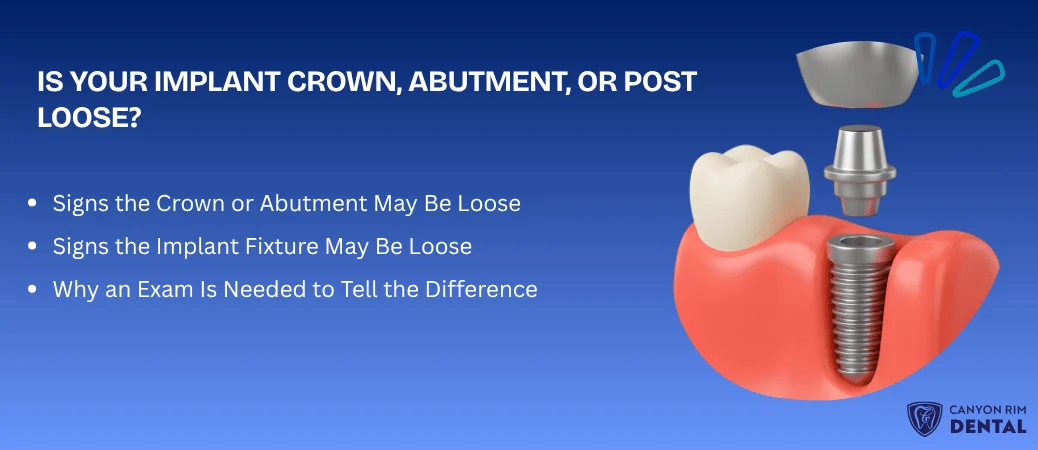
The wobble you feel could come from three different places: the visible crown, the small connector called the abutment, or the implant post anchored in your jawbone.
Each one has its own warning signs, but they can feel similar enough that you cannot reliably tell them apart on your own.
Signs the Crown or Abutment May Be Loose
A loose crown may feel as though it shifts during normal speaking or chewing, even when the gum tissue appears healthy.
An abutment problem can cause similar movement, making a dental examination necessary to identify the loose component.
These issues are usually painless. A loose crown or abutment does not necessarily mean the implant post has failed.
However, movement of the implant fixture itself is more concerning and requires prompt professional evaluation.
Signs the Implant Fixture May Be Loose
When the implant post itself is unstable, the whole structure tends to move as one piece rather than just the top portion.
This is less common, but it’s the more serious version, since it can point to bone loss or an infection called peri-implantitis around the implant.
Watch for gum redness, bleeding, a bad taste, or gums that look like they’re pulling away from the implant.
Those signs suggest the problem has reached the tissue and bone supporting the post, not just the parts above the gumline.
Why an Exam Is Needed to Tell the Difference
Symptoms alone cannot confirm which part is loose, which is why a hands-on exam and an X-ray matter so much here.
Your dentist checks the crown, feels for movement at the abutment, and looks at the bone level around the implant before deciding on treatment, a process reflected in general dental implant care standards.
Why Does an Implant Become Loose?
A loose implant usually traces back to one of three things: a mechanical problem with the hardware, an infection that has damaged the supporting bone, or too much bite force on a healing or aging implant.
Knowing which category you fall into helps explain why your dentist will ask the questions they do.
A Loosened Screw, Failed Cement, or Worn Component
The abutment screw that holds the crown to the implant can loosen gradually from years of normal chewing.
One clinical review found screw loosening in 14.5% of certain wide-diameter implants over a multi-year follow-up period, and other estimates for single-tooth implants put loose abutment screws at a similarly common complication.
If your crown was cemented rather than screwed in, the dental cement holding it can wear down over time, letting the cemented crown shift free.
A worn abutment or a crack in the crown material can create the same loose feeling even when the implant post is completely healthy.
Inflammation, Infection, and Loss of Supporting Bone
Peri-implantitis is an infection that damages the gum and bone around an implant, and it’s a leading cause of true implant looseness after the healing period.
Warning signs include gum inflammation, bleeding gums when you brush, receding gums, and a bad taste that won’t go away.
Understanding the connection between gum disease and dental implants is important because untreated inflammation can lead to bone loss around the implant.
Early dental checkups can help identify these problems before they become more serious.
Healing Problems and Excessive Bite Pressure
Early on, a loose implant can mean osseointegration never fully completed, the process where bone fuses to the implant surface.
Failed osseointegration happens more often in people with poor bone quality, uncontrolled diabetes, or other systemic health issues that slow healing.
Later in an implant’s life, an uneven bite or excessive biting forces from teeth grinding (bruxism) can stress the connection between implant and crown.
Over months or years, that repeated pressure can loosen screws or crack components even on an implant that healed perfectly the first time.
How Will a Dentist Diagnose and Fix the Problem?
Your dentist starts with a hands-on exam and an X-ray, then matches the treatment to exactly what’s loose. Fixing a screw looks nothing like treating an infection, so this diagnostic step shapes everything that follows.
Examining the Restoration, Bite, Gums, and Supporting Bone
Expect your dentist to check the crown for movement, feel the abutment connection, and examine your gums for swelling, bleeding, or recession.
An X-ray shows the bone level around the implant post and reveals whether bone loss has occurred.
Your bite will likely get checked too, since uneven pressure from grinding or a high spot on the crown often plays a role.
Repairing a Loose Crown, Screw, or Abutment
If the crown or abutment is the issue, your dentist can often remove it, clean the connection, and retighten the screw with a torque wrench calibrated to the implant manufacturer’s specifications.
This keeps the screw snug without over-tightening it, which could damage the threads.
A cracked crown or failed cement may need a replacement crown rather than a simple retightening, though the existing abutment can often be reused.
Treating Infection or Bone Loss
Treatment for peri-implantitis depends on the severity of inflammation and bone loss. Your dentist may recommend professional cleaning, measures to control infection, or surgical treatment in more advanced cases.
Antibiotics and bone grafting may be considered in selected situations, but they are not appropriate for every patient.
When Implant Removal and Replacement May Be Necessary
If the implant post itself has failed to integrate or has lost too much supporting bone, implant removal becomes the safer option.
After the site heals, sometimes with bone grafting first, your dentist or an implant specialist can plan implant removal and replacement.
Dental implant failure at this level is less common than a loose crown or screw, but it does happen, and catching it early gives you more options for a successful second placement.
How Can You Reduce the Risk of Future Looseness?
Daily cleaning around the implant and regular dental checkups catch small problems before they become loose implants.
Most prevention comes down to keeping the gum tissue healthy and controlling the forces your bite puts on the restoration.
Clean Gently Around the Implant and Keep Dental Checkups
To care for your dental implant, use a soft-bristled toothbrush, a water flosser, or an interdental brush recommended by your dentist.
These tools can help remove plaque from areas that are difficult to clean with a regular toothbrush alone.
Gum inflammation around an implant often starts with plaque buildup in these hard-to-reach spots, so consistent cleaning habits matter more here than around natural teeth.
Routine checkups let your dentist measure gum pockets and check bone levels on X-rays before you notice any symptoms.
Address Grinding and Bite Problems
If you grind your teeth at night, a custom night guard protects both the implant and your natural teeth from excessive biting forces.
Tell your dentist if you wake up with a sore jaw or notice a flat, worn pattern on your teeth, since bruxism often goes unnoticed until it has already stressed an implant.
An uneven bite from missing teeth nearby can also direct extra force onto one implant. Addressing nearby gaps with teeth implants for multiple missing teeth or a bite adjustment can spread that pressure back out evenly.
Get a Loose Implant Checked Before It Gets Worse
A loose dental implant is a signal worth listening to, whether it showed up last week or three years after your surgery.
Most cases trace back to a loose crown or screw, a fixable problem that rarely threatens the implant post itself.
The ones that do involve the implant post respond best when caught early, before bone loss or infection has a chance to spread.
Waiting it out at home, or trying to tighten or re-cement the crown yourself, only narrows your options later.
Frequently Asked Questions
Can a loose dental implant be saved?
Many loose implants can be saved, especially when the problem is a loose crown or abutment screw rather than the implant post itself.
Catching the issue early, before infection or significant bone loss sets in, gives you the best chance of keeping the original implant.
Can a dentist tighten a loose implant crown?
Yes, a dentist can often remove the crown, clean the connection, and retighten the screw with a torque wrench rather than replacing anything.
If the crown has cracked or the cement has failed, a new crown may be needed, but the existing abutment can frequently be reused.
What if my dental implant moves slightly but does not hurt?
Painless movement still needs an exam, since gum disease and bone loss around an implant can progress without causing discomfort at first.
Waiting for pain to show up before calling your dentist means the underlying problem has had more time to worsen.
Why is my dental implant loose after two years?
A loosened abutment screw from years of normal chewing is a common cause at this stage, along with gum disease that has quietly damaged the supporting bone.
Teeth grinding and an uneven bite can also place steady extra stress on an implant that healed well initially.
How much does it cost to fix a loose dental implant?
Cost depends entirely on the diagnosis, since retightening a screw costs far less than treating an infection with bone grafting or replacing a failed implant.
Your dentist can only give you an accurate estimate after the exam and X-rays show exactly what’s loose and why.