



You bite into something hard and feel a sharp pain shoot through your tooth. Now you’re wondering if that crack will fix itself or if you need to see a dentist right away.
Many people hope their tooth will heal on its own, but the truth is important to know.
A cracked tooth cannot heal on its own because tooth enamel does not regenerate once it becomes damaged.
Unlike bones or skin, your teeth lack the living cells needed to repair cracks naturally. A cracked tooth needs professional treatment to prevent the damage from getting worse.
The good news is that dentists have many ways to fix cracked teeth and save your smile. Without treatment, a cracked tooth can deepen and lead to infection, severe pain, and tooth loss.
Getting help early means simpler treatment and a better chance of keeping your natural tooth.
Key Takeaways
- Cracked teeth cannot repair themselves because enamel does not grow back after damage
- Early dental treatment can prevent pain, infection, and tooth loss from worsening cracks
- Dentists offer several treatment options to fix cracked teeth and restore their function
Why Cracked Teeth Cannot Heal Naturally
Teeth lack the biological ability to repair themselves once damaged, which means a cracked tooth cannot heal on its own.
Your tooth enamel doesn’t regenerate like skin or bone tissue, and cracks will remain or worsen over time without professional treatment.
Understanding Tooth Enamel and Its Limits
Tooth enamel is the hardest substance in your body, but it has a major weakness. Unlike your bones or skin, enamel contains no living cells. This means it can’t repair itself when it gets damaged.
When you cut your skin, cells rush to the area to heal the wound. Your bones can knit back together after a fracture. But tooth enamel doesn’t work this way because it lacks the blood supply and living cells needed for regeneration.
The outer layer of your teeth is made mostly of minerals. Once a crack forms in this mineral structure, it stays there permanently. You can’t grow new enamel to fill in the gap or seal the crack.
This is why cracked teeth don’t heal naturally no matter how long you wait. The damage is permanent from the moment it happens.
Differences Between Craze Lines and True Cracks
Not all lines on your teeth mean the same thing. Craze lines are tiny, shallow cracks that only affect the outer enamel surface. They look like small hairline fractures and rarely cause problems.
These surface lines are extremely common in adults. They don’t usually hurt or need treatment. You might not even notice them unless you look closely in the mirror.
True cracks go deeper into the tooth structure. They can extend through the enamel and into the dentin layer beneath it. Some cracks even reach the pulp where your nerves and blood vessels live.
The main difference is that craze lines stay stable while true cracks tend to spread over time. A real crack will get worse with chewing pressure and temperature changes.
Progression of Untreated Tooth Cracks
A tooth crack gets worse the longer you leave it alone. Every time you chew, you put hundreds of pounds of pressure on your teeth. This constant stress makes the crack spread deeper and wider.
At first, you might only feel pain when biting certain foods. The discomfort might come and go, making you think the problem is getting better. But intermittent pain doesn’t mean healing has occurred.
As the crack deepens, bacteria can enter the inner parts of your tooth. This leads to infection, increased sensitivity, and constant pain. The crack may eventually reach below your gumline, at which point the tooth often can’t be saved.
What starts as a minor crack can turn into a dental emergency within weeks or months. Early treatment usually means simpler fixes like crowns, while waiting can result in needing a root canal or even tooth extraction.
Types and Causes of Tooth Cracks
Teeth can crack for many different reasons, from everyday habits to dental emergencies. Understanding what causes these cracks and the different types that can occur helps you recognize when you need dental care.
Common Causes of Cracked Teeth
Your teeth face daily stress that can lead to cracks over time. Chewing hard foods like popcorn kernels, peppermint sticks, or crushed ice puts a lot of pressure on your teeth. These foods can create small cracks that grow larger with repeated stress.
Chewing hard objects that aren’t food also damages your teeth. Biting on pens, pencils, or fingernails can weaken tooth structure. Even opening packages with your teeth can cause sudden fractures.
Age plays a role in tooth cracking too. Most cracks happen in people over 50 because teeth become more brittle over time.
Your teeth also expand and contract when exposed to hot and cold foods, which can create tiny stress lines that eventually turn into larger cracks.
Bruxism and Teeth Grinding Effects
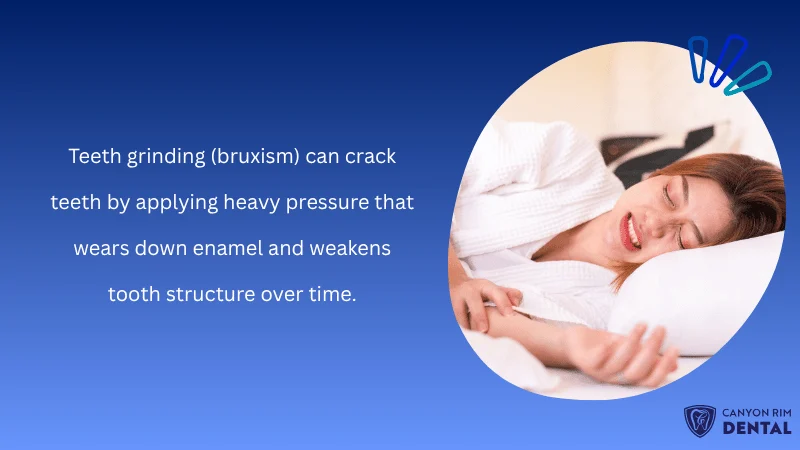
Teeth grinding, also called bruxism, is one of the leading causes of cracked teeth. Many people grind their teeth during sleep without knowing it. This constant pressure wears down tooth enamel and creates small fractures.
Bruxism puts up to 250 pounds of force on your teeth. This repeated stress weakens the tooth structure over months or years. The grinding motion also removes protective enamel, making teeth more likely to crack.
You might have bruxism if you wake up with jaw pain or headaches. Your dentist can spot signs of grinding during regular checkups. Wearing a night guard can protect your teeth from this damaging habit.
Risks from Large Fillings and Dental Injuries
Large fillings weaken the structure of your teeth and increase crack risk. When a filling takes up a significant portion of the tooth, less natural tooth structure remains to handle chewing forces.
The filled tooth becomes more fragile over time.
Dental injuries from accidents or sports can crack teeth instantly. A fall, car accident, or blow to the face can fracture even healthy teeth. Contact sports like football, hockey, or basketball put your teeth at higher risk.
Previous dental work also makes teeth more prone to cracking. Root canals remove the inner pulp that keeps teeth flexible, making them more brittle. Teeth that have had multiple procedures are weaker than untreated teeth.
Types of Tooth Fractures
Different types of tooth cracks require different treatments. Understanding these categories helps explain why some cracks need immediate care while others just need monitoring.
Craze lines are tiny surface cracks in the enamel only. They don’t cause pain and usually don’t need treatment. Most adults have some craze lines.
Fractured cusp happens when a piece of the chewing surface breaks off. This typically occurs around a filling. Your dentist can usually fix this with a crown.
Cracked tooth means the crack extends from the chewing surface toward the root. These cracks may extend below the gum line. You need prompt treatment to prevent the crack from spreading.
Split tooth occurs when a crack divides the tooth into distinct segments. This happens when a cracked tooth goes untreated for too long. The tooth often can’t be saved.
Vertical root fracture starts below the gum and moves upward. These cracks often go unnoticed until infection develops. They usually require tooth extraction.
Schedule a consultation to stop a tooth crack from getting worse.
Recognizing Symptoms of a Cracked Tooth
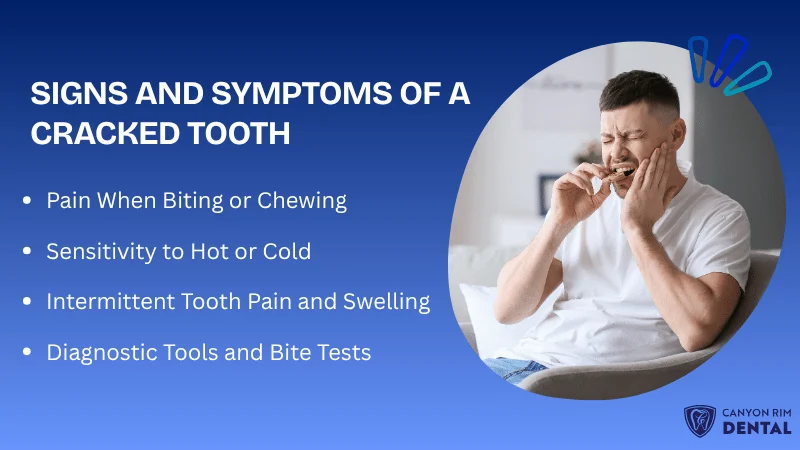
A cracked tooth often causes specific types of discomfort that can help you identify the problem. Sharp pain while biting down or releasing and sensitivity to temperature changes are common signs that something is wrong with your tooth.
Pain When Biting or Chewing
One of the most telling symptoms of a cracked tooth is sharp pain when you bite down on food. You might notice the pain happens when you release the bite rather than when you first chomp down.
This pain can be sudden and intense, almost like a jolt through your jaw.
The discomfort often feels unpredictable. One bite might feel completely normal, while the next sends a sharp pain through your mouth.
You may also have trouble figuring out which specific tooth is causing the problem since the pain can seem to move around.
Hard or crunchy foods tend to trigger this pain more than soft foods. You might find yourself avoiding certain foods or chewing only on one side of your mouth to dodge the discomfort.
Sensitivity to Hot or Cold
Temperature sensitivity is another common sign of a cracked tooth. You might feel pain when drinking hot coffee or eating ice cream. The pain usually comes on quickly when your tooth contacts something hot or cold.
This sensitivity happens because the crack allows temperature changes to reach the inner parts of your tooth. The pain might last only a few seconds or linger for several minutes after you finish eating or drinking.
Some people notice the sensitivity gets worse over time. What started as mild discomfort can become more intense as the crack deepens or bacteria enter the tooth.
Intermittent Tooth Pain and Swelling
Cracked tooth pain often comes and goes, which makes it confusing. You might have pain for a few days, then feel fine for weeks. This on-and-off pattern can make you think the problem has fixed itself.
Swelling around the affected tooth or gums is a warning sign that needs attention. If you notice swelling along with pain, the crack may have allowed bacteria to enter your tooth.
Fever combined with these symptoms means you should see a dentist right away.
The disappearing pain doesn’t mean your tooth has healed. Cracks don’t repair themselves, and waiting too long can lead to bigger problems.
Diagnostic Tools and Bite Tests
Your dentist uses several methods to find cracks that might not be visible to the naked eye. A bite test involves having you bite down on a special tool to see which tooth causes pain. This helps pinpoint the exact location of the crack.
Transillumination is a technique where your dentist shines a bright light through your tooth. Cracks show up as dark lines that interrupt the light passing through the tooth. This tool works well for finding hairline cracks.
Other diagnostic methods include:
- Visual examination with magnification to spot small cracks
- Dental dye that seeps into cracks and makes them visible
- X-rays to check for cracks below the gum line
- Probing around the tooth to test for separation
Your dentist might need to use multiple tools to get a complete picture of the damage.
Treatment Options for Cracked Teeth
Dentists can repair cracked teeth using several methods based on how deep the crack goes and where it’s located. Treatment for cracked teeth ranges from simple bonding for minor cracks to extraction in extreme cases.
Dental Bonding and Fillings
Dental bonding works well for small cracks that only affect the outer layer of your tooth. Your dentist applies a tooth-colored resin material to fill in the crack and restore the tooth’s shape.
The process is quick and usually takes just one visit. Your dentist will clean the area, apply the bonding material, and shape it to match your natural tooth. They’ll then use a special light to harden the resin.
Bonding is the least expensive option for tooth repair. It works best for minor cosmetic cracks or small chips that don’t go deep into the tooth structure.
However, the bonding material isn’t as strong as your natural tooth and may need replacement after several years.
Dental Crown Solutions
A dental crown covers your entire tooth and provides strong protection for moderate to large cracks. Crowns are custom-made caps that fit over your damaged tooth like a helmet.
Your dentist will first remove some of the outer tooth structure to make room for the crown. They’ll take impressions of your tooth and place a temporary crown while a lab makes your permanent one.
During your second visit, they’ll cement the permanent crown in place.
Crowns can be made from porcelain, ceramic, metal, or a combination of materials. Porcelain and ceramic crowns look most like natural teeth. A dental crown can last 15 years or longer with proper care and protects your tooth from further damage.
Root Canal Therapy and When It’s Needed
Root canal therapy becomes necessary when a crack extends into the pulp of your tooth where nerves and blood vessels live. You might need root canal treatment if you experience sharp pain when biting or sensitivity that won’t go away.
During root canal therapy, your dentist removes the infected or damaged pulp from inside your tooth. They clean the inner chambers, disinfect them, and fill the space with a rubber-like material.
A crown is usually placed on top after root canal treatment to protect the weakened tooth structure.
Many people worry about root canal pain, but the procedure itself shouldn’t hurt more than getting a filling. Root canal therapy can save your natural tooth and prevent the need for extraction.
Tooth Extraction for Severe Cases
Tooth extraction is the last resort when a crack is too severe to repair. This happens when the crack extends below the gum line or splits the tooth vertically into separate pieces.
Your dentist will numb the area completely before removing the tooth. After extraction, you’ll need to replace the missing tooth to prevent other teeth from shifting. Options include dental implants, bridges, or partial dentures.
Without treatment, a cracked tooth can deepen and lead to infection or tooth loss anyway. Early treatment gives you the best chance to save your tooth and avoid extraction.
Preventing Tooth Cracks and Protecting Your Smile
Taking simple steps each day can help you avoid the pain and cost of dealing with a cracked tooth. Protecting your teeth through good habits, using the right tools, and seeing your dentist regularly makes a real difference in keeping your smile healthy.
Everyday Habits to Prevent Cracks
You can prevent cracked teeth by being mindful of what you put in your mouth. Avoid chewing hard foods like ice, popcorn kernels, and hard candy that put too much pressure on your teeth. These items can crack even healthy teeth.
Be careful with sticky foods too. They can pull on teeth and existing dental work in ways that cause damage.
If you play sports, wear a mouthguard to protect your teeth from impacts. Even recreational activities like basketball or biking can lead to dental injuries.
Foods and habits to avoid:
- Ice chewing
- Unpopped popcorn kernels
- Hard candies
- Pens and pencils
- Fingernails
- Opening packages with your teeth
Using your teeth as tools to open bottles or tear packages puts unnecessary stress on them. Keep scissors handy instead.
The Role of Nightguards and Oral Hygiene
Many people grind or clench their teeth while sleeping without even knowing it. This puts constant pressure on your teeth that can lead to cracks over time.
A nightguard worn during sleep protects your teeth from grinding damage. Your dentist can make a custom-fitted nightguard that’s comfortable and effective. These guards cushion your teeth and prevent the wear that leads to cracks.
Good oral hygiene keeps your teeth strong and less likely to crack. Brush twice daily with fluoride toothpaste and floss once a day. Weak teeth from decay are more prone to cracking.
Limit sugary and acidic drinks that weaken tooth enamel. When enamel gets thin, teeth become more vulnerable to damage.
Importance of Regular Dental Checkups

Regular dental exams help catch small problems before they turn into cracked teeth. Your dentist can spot early warning signs like weakened enamel or small chips during routine exams.
These visits typically happen every six months. During checkups, your dentist examines your teeth for cracks you might not feel yet. Early detection means simpler treatment options.
Your dentist can also identify if you’re grinding your teeth based on wear patterns. They’ll recommend a nightguard if needed to prevent further damage.
Professional cleanings remove plaque and tartar that weaken teeth. Stronger teeth resist cracking better than weakened ones.
X-rays taken during dental checkups reveal cracks and other issues below the surface that aren’t visible during a visual exam.
Complications of Ignoring a Cracked Tooth
A cracked tooth that goes untreated can lead to serious problems like gum disease, infection, and tooth loss. These complications often require emergency dental care and more complex treatments than the original crack would have needed.
Risk of Tooth Loss and Infection
When you ignore a tooth crack, bacteria can enter through the opening and reach the inner pulp tissue. This creates a pathway for bacterial invasion and infection that leads to painful abscesses.
The infection symptoms include:
- Persistent throbbing pain
- Swelling in your gums or face
- Sensitivity to pressure when biting
- Fever
- Bad taste in your mouth
Once bacteria reach the pulp, the nerve tissue can die. At this stage, you’ll need root canal therapy or extraction.
Your tooth also becomes weaker over time. Normal chewing forces make the crack wider and deeper. What starts as a small fracture can split your tooth into separate pieces. A split tooth often cannot be saved and requires extraction.
Tooth loss from an untreated crack creates additional problems. Your nearby teeth may shift into the empty space. This changes your bite alignment and can affect how you chew.
Dental Emergencies and When to Seek Help
Some situations require immediate attention. You should seek emergency dental care if you experience severe or worsening pain that doesn’t respond to over-the-counter medication.
Contact a dentist right away if you notice:
- Facial swelling that spreads
- Fever above 101°F
- Difficulty swallowing or breathing
- A large piece of tooth breaks off
- Pus draining from the affected area
While rare, untreated dental infections can spread to other parts of your body. This creates serious health risks beyond your mouth.
If you have moderate symptoms like sensitivity or occasional bite pain, schedule an appointment within a few days. Early treatment prevents most dental emergencies and keeps your options simple.
Frequently Asked Questions
Many people have questions about cracked teeth, from identifying the problem to understanding treatment options. The answers below address the most common concerns about tooth cracks and what to do about them.
What are the signs and symptoms of a hairline crack in a tooth?
A hairline crack might not cause obvious symptoms at first. You may feel sharp pain when you bite down on food or when you release the bite. The pain often comes and goes rather than staying constant.
Temperature sensitivity is another common sign. Your tooth might hurt when you drink hot coffee or eat ice cream. Sometimes the pain is hard to pinpoint, making it difficult to figure out which tooth is affected.
You might not see the crack with your eyes alone. These tiny fractures are often invisible without special dental equipment or lighting.
What should I do right away if I notice my tooth is cracked but not broken?
Call your dentist as soon as possible to schedule an appointment. Acting quickly when you see a crack helps protect your tooth from further damage.
While waiting for your dental appointment, rinse your mouth with warm salt water. Avoid chewing on the affected tooth. You can take over-the-counter pain medication if needed.
Don’t try to fix the crack yourself with home remedies. These approaches might reduce pain temporarily but won’t repair the damage.
Is it possible to have a tooth cracked in half without feeling any pain?
Yes, you can have a cracked tooth without pain in some cases. The crack might not have reached the inner part of your tooth where the nerves are located. Some cracks only affect the outer enamel layer.
Pain often develops later as the crack deepens or bacteria enter the tooth. Just because a crack doesn’t hurt doesn’t mean it’s safe to ignore. The damage can get worse over time even without symptoms.
When does a cracked tooth need a crown, root canal, or extraction?
Treatment depends on how severe the crack is. Minor surface cracks might only need smoothing or a small filling. Deeper cracks that reach the tooth’s inner pulp usually require a root canal to remove infected tissue.
A crown often goes on top after a root canal to protect what’s left of the tooth. The crown covers and strengthens the cracked tooth so you can use it normally.
Extraction becomes necessary when the crack extends below the gumline. At that point, the tooth usually can’t be saved. Your dentist will examine your tooth and recommend the best option for your situation.
Are craze lines on teeth something to worry about, or are they harmless?
Craze lines are tiny, shallow cracks that only affect the outer enamel. They’re very common and usually don’t cause pain or other problems. Most people develop them over time from normal wear and tear.
These lines are mostly a cosmetic issue. They don’t require treatment unless they bother you for appearance reasons. Your dentist can help improve their appearance if you want.
Craze lines are different from deeper cracks that go into the tooth structure. If you’re not sure what type of crack you have, your dentist can tell the difference during an exam.
What can happen if I leave a cracked or broken tooth untreated for years?
A cracked tooth won’t heal on its own if left untreated. The crack will likely get bigger over time. Bacteria can enter through the crack and cause an infection inside your tooth.
The infection can spread to your gums and jawbone. You might develop an abscess, which is a pocket of pus that causes severe pain and swelling. In serious cases, the infection can spread to other parts of your body.
The tooth may eventually become unsavable and need extraction. You’ll then need a dental implant, bridge, or denture to replace the missing tooth.
Getting treatment early helps you avoid these complications and saves you time and money in the long run.