

Knowing how to prioritize dental treatment can help when several teeth need attention but your budget cannot cover everything at once.
Start by addressing urgent infections and teeth at immediate risk, then work with your dentist to manage progressing disease, restore chewing function, and schedule elective cosmetic improvements later.
A personalized examination and phased treatment plan can help you understand what needs care now and what may safely wait.
Ask for a written, phased dental treatment plan that fits your financial limits. Affordable dental care starts with identifying the smallest useful next step, along with the follow-up needed to protect the rest of your teeth.
Which Dental Problems Need Attention First?
Your first priority is any problem that threatens your health or puts a tooth at immediate risk. After urgent care, your dentist should rank active disease and chewing problems before elective changes.
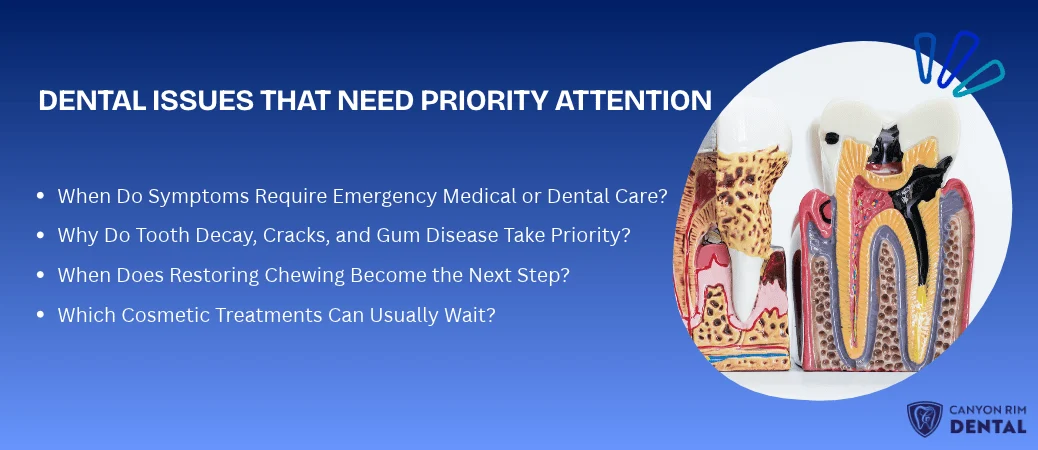
When Do Symptoms Require Emergency Medical or Dental Care?
Call 911 or go to an emergency department if you have trouble breathing or swallowing, rapidly spreading swelling in your face or neck, or bleeding that will not stop.
Swelling around your eye or a serious facial injury also needs emergency medical evaluation.
Seek urgent dental care for severe tooth pain, localized swelling, a broken tooth, or a knocked-out adult tooth. Contact your dentist promptly for dental emergencies, and explain your symptoms when you call.
If you have fever with facial swelling, seek same-day assessment. Hospital care addresses dangerous complications; you still need dental treatment for the tooth causing the problem.
Why Do Tooth Decay, Cracks, and Gum Disease Take Priority?
You need to address active tooth decay, cracked teeth, and gum disease before they cause further damage. Your dentist weighs the depth of decay, the amount of sound tooth left, and the support around each tooth.
A cracked tooth needs an assessment even if pain comes and goes. Depending on its condition, your treatment might involve a filling, root canal, crown, or extraction.
Your gum health also affects whether teeth are worth restoring. As gum disease progresses, you risk damage to the bone supporting your teeth.
Ask which stage of gum disease you have and whether periodontal therapy, such as scaling and root planing, belongs in an early phase.
When Does Restoring Chewing Become the Next Step?
Once urgent problems are controlled, prioritize teeth that help you eat comfortably and keep your bite stable. If chewing is already difficult, your dentist should address function during the early stages of your plan.
You might need crowns to protect weakened teeth or a replacement for missing teeth. Your options include partial dentures, bridges, and dental implants, depending on your remaining teeth and bone support.
Ask about the risks of delaying tooth replacement in your specific mouth. A lower-cost removable replacement deserves discussion if a fixed option is beyond your budget.
Which Cosmetic Treatments Can Usually Wait?
You can usually place teeth whitening, appearance-only veneers, and cosmetic bonding after disease control and needed repairs. Tell your dentist which concerns affect comfort and which concern appearance alone.
Your orthodontic treatment needs a separate assessment. Braces used for elective straightening have different priorities from treatment for a bite problem that damages teeth or interferes with chewing.
Ask whether postponing a proposed treatment changes your health risk or only delays the result you want. That distinction helps you decide where to direct limited funds.
How Can Your Dentist Build a Phased Treatment Plan?
Your dentist can divide your dental procedures into stages with clear priorities, costs, and review dates. A useful plan also explains which steps must happen together.
Start With an Exam and a Ranked List of Problems
Begin with an exam, any necessary X-rays, and a gum assessment. Share your medical history and symptoms, including discomfort that has recently stopped.
At Canyon Rim Dental, ask for a tooth-by-tooth explanation during your dental exam. Request a ranked list that separates urgent problems, active disease, functional repairs, and elective work.
Tell your dentist about dental anxiety early. Ask for explanations in manageable steps and discuss appointment length so your plan reflects your comfort as well as your budget.
Ask What Can Wait and What Could Worsen
Ask your dentist to explain the risk of delaying each recommended procedure. “How soon should this be treated, and what would change that timing?” gives you more useful guidance than a broad promise that something can wait.
For each tooth, request answers to these questions:
- What damage is present now?
- What is likely to happen without treatment?
- Would delay change the treatment options?
- How will you check whether it is worsening?
Your dentist should set timing from your exam findings. Avoid choosing your own waiting period based only on pain or the size of the estimate.
Identify Treatment Dependencies Before Scheduling
Ask which procedures depend on earlier work being completed. Gum treatment may need to happen before a final restoration, and some teeth need assessment before you commit to saving them.
If you need root canals, include the final restorations in the discussion. Ask whether the tooth needs a buildup and one of the recommended dental crowns, plus how it will be protected until completion.
Before starting, request the cost of the full sequence. That helps you avoid reaching a necessary follow-up step without a way to pay for it.
Request Written Costs, Alternatives, and Review Dates
Get a written estimate for each phase, including your expected share after insurance. Ask whether specialist visits or other necessary services carry separate charges.
Your plan should record:
- The tooth or area being treated and its urgency.
- The recommended treatment and reasonable alternatives.
- Temporary measures and their limits.
- Estimated fees and expected insurance payments.
- Prerequisites and a reassessment date.
If materials affect the price, ask how the restoration material affects your dental treatment. For an extensive plan, a second opinion is reasonable, provided urgent care continues on time.
What Can Protect Your Teeth Between Treatment Phases?
You can reduce the risk of new damage between visits through dentist-approved temporary care and consistent oral hygiene. Keep a review schedule so a delayed procedure stays under observation.
Ask About Temporary Repairs and Their Limits
Ask whether temporary fillings or another short-term repair would protect a tooth while you arrange definitive care. Your dentist needs to confirm that the option fits the tooth’s condition.
Request clear instructions about eating, cleaning, and what to do if the repair comes loose. Also ask when the temporary work needs reassessment or replacement.
Avoid treating a temporary repair as permission to postpone indefinitely. If antibiotics are prescribed for an infection, you still need the recommended treatment for its dental cause.
Maintain Oral Hygiene and Scheduled Follow-Ups
Keep your daily routine manageable and consistent. Brush with fluoride toothpaste twice daily for two minutes and clean between your teeth daily.
Ask your dentist whether you need prescription fluoride or a different tool for cleaning around damaged teeth. If you have had deep cleaning, follow your instructions for gum care after scaling and root planing.
Limit frequent sugary drinks and snacks. For protection against everyday tooth wear, avoid chewing ice and hard objects, especially around weakened teeth.
Know Which Changes Mean You Should Call Sooner
Contact your dentist before your scheduled review if you develop new pain, swelling, drainage, a bad taste, or pain when biting. Report a loose temporary filling, a new break, or a tooth that feels loose.
Explain what changed and when it started. Your dentist will use that information to decide whether the treatment order needs to change.
If severe pain suddenly stops, still keep your appointment. Relief alone does not establish that the underlying problem has healed.
Where Can You Find Free or Lower-Cost Dental Care?
Start with community clinics and dental schools, then check charitable programs and public benefits for which you qualify. Your location, income, and treatment needs affect availability.
Check Community Health Centers and Sliding-Fee Clinics
Contact federally qualified health centers and community dental clinics near you. At many HRSA-supported health centers, your cost is based on your income.
Ask whether the clinic offers the procedure you need, accepts new adult patients, and provides urgent appointments. Confirm which income documents to bring and what the first visit will cost.
Free dental clinics have their own eligibility rules and service limits. Ask about ongoing treatment as well as one-time relief, particularly if several teeth need care.
Compare Supervised Treatment at Dental Schools
Ask nearby dental schools whether their teaching clinics accept patients for your treatment needs. Student care takes place under licensed supervision, and fees are often lower than private-practice fees.
Plan for longer visits and possible screening appointments. Ask whether the quoted price includes X-rays and follow-up care.
Check the clinic’s urgent-care process before relying on it for a painful tooth. A dental hygiene school focuses on preventive services; confirm where you would receive fillings or more complex work.
Explore Donated Dental Services and Local Charities
Check donated dental services programs if you meet their eligibility requirements. Through Dental Lifeline Network, you may qualify for volunteer care if you are over 65, have a permanent disability, or have a chronic serious illness.
Ask whether your state’s Donated Dental Services (DDS) program is accepting applications. Waiting lists and available services vary, so arrange urgent assessment separately.
Your local health department or dental society is another place to ask about charitable events. Confirm whether an event offers the specific treatment you need and whether follow-up care is available.
Check Medicaid and Other Benefits for Eligibility
Check your state’s Medicaid dental benefits and enrollment rules. Adult coverage varies by state, including which procedures are covered and which dentists participate.
If you have Medicare Advantage, review the dental benefit details and provider network. Original Medicare covers limited dental services connected to certain medical care; routine dental care is largely excluded.
Also check veterans’ benefits if you qualify. Ask each program about service limits and prior approval before scheduling treatment.
How Can You Manage the Remaining Treatment Costs?
Reduce your remaining bill by checking benefits and lower-cost treatment choices before taking on debt. Then choose a payment arrangement you can sustain through later phases.
Review Insurance Limits Without Delaying Urgent Care
Confirm your dental insurance network, deductible, remaining annual maximum, and any waiting periods. An office that submits claims for you is not necessarily an in-network provider.
Ask for a pretreatment estimate for major work. Treat it as an estimate, since final payment depends on your plan’s rules and the claim.
Check coverage for each stage of linked procedures. Keep urgent treatment on the clinical schedule while you resolve benefit questions with the insurer.
Compare Dental Savings Plans With Insurance
A dental savings plan gives you access to participating providers’ discounted fees in exchange for a membership charge. Dental discount plans do not pay insurance claims.
Compare the total cost for the actual procedures in your written plan:
| What you check | Dental insurance | Dental savings plan |
| How it helps pay | Pays covered claims | Reduces participating fees |
| Your membership cost | Premium | Membership fee |
| Provider rules | Plan network rules | Participating dentists |
| Key limits to verify | Maximums, exclusions, waiting periods | Fee schedule, exclusions |
| Your treatment bill | Your share after benefits | Discounted fee you pay |
Ask whether your dentist participates and whether the discount applies to your procedures. Confirm whether discounts and insurance benefits can be combined before buying a membership.
Ask About In-House Payment Arrangements
Ask whether your dental office accepts payments by treatment phase or offers an in-house arrangement. Availability and terms differ by office.
When discussing financing options with Canyon Rim Dental, request written terms for any arrangement offered. Confirm the deposit, payment dates, fees, and what happens if your treatment changes.
Include future dental visits in your household budget before agreeing to a monthly payment. If you have eligible HSA or FSA funds, check whether they cover part of your treatment costs.
Check Interest, Fees, and Repayment Terms Before Financing
Read the full agreement before accepting dental financing. Compare dental financing plans by their total repayment cost, including interest and fees.
Medical credit cards, including CareCredit, offer different terms depending on the purchase and promotion.
With deferred-interest financing, interest can be charged back to the purchase date if you leave a balance after the promotional period ends.
Ask for the annual percentage rate, promotional deadline, and payment needed to clear the balance on time. Minimum payments might leave a balance at that deadline, so check the payoff schedule yourself.
Start With the Care That Protects Your Health

Your next step is an exam and a written plan that puts health-threatening problems and vulnerable teeth first. You deserve treatment choices that account for your financial limits without minimizing your symptoms.
Before you leave the appointment, confirm the first procedure, its estimated cost, and your next review date.
Keep a copy of the plan, and contact your dentist if symptoms or your ability to pay change before the next phase.
Frequently Asked Questions
Use your exam findings and written estimates to guide decisions about timing and dental costs. These answers help you prepare specific questions about affordable dental care.
What if I cannot afford even the most urgent dental treatment?
Tell the dental office you need urgent assessment and cannot pay the quoted amount, then ask about a lower-cost stabilization option or a clinic referral.
Contact a community health center for urgent appointment availability, and seek emergency medical care for breathing trouble, swallowing trouble, or spreading swelling.
Should I treat a painful tooth before a painless cavity?
You should have the painful tooth assessed promptly, while letting your dentist rank both teeth by infection risk and damage. Your painless cavity might also need early care if it is deep or leaves the tooth weak.
Can I spread treatment across two insurance benefit years?
You can spread appropriate treatment across benefit years when your dentist agrees that the timing is clinically reasonable.
Confirm your dental insurance reset date, new deductible, and coverage rules, including how linked procedures are billed.
Is pulling a tooth always cheaper than saving it?
Your extraction bill might be lower upfront, but compare the full costs of root canal treatment versus tooth extraction, including any replacement you need. Ask about the tooth’s chance of lasting, the required restoration, and the effect of leaving a gap.
Can a dentist fix several teeth in one appointment?
Your dentist can treat several teeth in one appointment when the procedures and your health allow it. Ask whether grouping treatment reduces visits and how a longer session affects your comfort, cost, and recovery.
Where can adults without insurance get free dental work?
You can seek free adult dental care through eligible charitable programs, free clinics, and local dental events.
Ask about income or medical requirements and the exact services offered; community health centers and dental schools also provide lower-cost options when free treatment is unavailable.